ABS Module Repair Estimate Checklist: Part Numbers, Fault Codes, and Questions to Ask
ABS Module Lab Team · · updated · 18 min read
Get an accurate ABS module repair estimate with this checklist covering part numbers, fault codes, and essential questions to ask before contacting repair…
When an ABS module fails, getting an accurate repair estimate requires specific information that many vehicle owners overlook. An incomplete estimate request leads to delays, mismatched parts, or surprise costs after your module reaches the repair facility. Before contacting a mail-in ABS module repair service like ABS Module Lab, you need three critical pieces of information: the exact part number from your module's label, documented fault codes from a proper scan tool, and answers to service-specific questions about your vehicle's configuration.
A proper ABS module repair estimate checklist prevents the most common delays in mail-in repair services. Unlike generic automotive repairs, ABS module bench work depends on precise identification of the controller family, the vehicle's specific coding, and the failure symptoms your scan tool recorded. This article provides the essential checklist for requesting an accurate quote, explains what information repair facilities need before committing to a price, and identifies the questions that distinguish a qualified bench repair service from one that will waste your time.
Understanding ABS Module Part Numbers and Identification
The part number stamped or printed on your ABS module's label is the single most important piece of information for any repair estimate. This number identifies the controller family, the manufacturer (Bosch, Continental, Mando, TRW, or others), and often the vehicle platform it serves. Without the correct part number, a repair facility cannot confirm compatibility, check their parts inventory, or quote the bench work accurately.
ABS module part numbers appear on a label affixed directly to the unit, not in your vehicle's owner manual or on an invoice from a previous repair. The label location varies: on Nissan actuators, it sits on the side of the aluminum pump housing; on Bosch 5.3 units common in Volkswagen and Audi vehicles, the label is on the control unit mounted to the valve block. Before removing anything, photograph the label clearly—most mail-in services, including ABS Module Lab, offer free module confirmation from a photo before you ship.
Part numbers often include letters, spaces, and punctuation that must be recorded exactly. For example, Nissan part number 47660-JA10A serves the 2007-2010 Altima SE/SL with the VQ35DE engine, while 47660-JA11A serves the same model year with a manual transmission. Transposing a single character can result in a mismatched refurbished unit or an incorrect quote. When photographing the label, ensure all characters are legible; if the label is corroded or damaged, note which characters are unclear in your estimate request.
Some vehicles use multiple part numbers over the production run due to running changes or supersessions. If your module's number does not appear in the repair facility's database, they may ask for your VIN to cross-reference the correct application. The VIN also confirms whether your vehicle falls under an open recall—Nissan actuators under recall typically require dealer service first, and a reputable mail-in lab will inform you of this before accepting the unit.
Essential Fault Codes to Document Before Requesting an Estimate
Active and stored fault codes provide the repair facility with a failure signature that helps distinguish a repairable controller fault from a wiring issue, wheel-speed sensor problem, or hydraulic failure. Recording codes before requesting an estimate is essential because many symptoms that appear to be ABS module failures originate elsewhere in the brake system. A qualified bench repair service will ask for these codes to assess whether mail-in repair is the appropriate solution.
Use a scan tool that reads ABS-specific codes, not a generic OBD-II reader that only retrieves powertrain faults. ABS modules store codes in the C1xxx and C2xxx range (manufacturer-specific brake system codes), and many also log U-codes indicating communication failures with other modules. Document every code present, including pending and history codes, along with the freeze-frame data if available. This data shows the conditions under which the fault occurred—vehicle speed, brake pedal position, and wheel speeds at the time of the fault.
Controller-internal faults typically produce specific code patterns. If your scan tool shows codes for multiple solenoid valve circuits failing simultaneously, or if the tool cannot communicate with the ABS module at all (often logged as U0121 or U0415 in other modules), the controller itself has likely failed. Conversely, if you see codes for a single wheel-speed sensor (C0035, C0040, etc.) with implausible signal characteristics, inspect the sensor and wiring before assuming the module needs repair. ABS Module Lab tests communication, power, ground, pump-motor circuits, and valve drivers on the bench—codes indicating these circuit failures support a repairable fault.
Some vehicles require specific initialization or calibration procedures after ABS module installation. If your codes include steering-angle sensor faults (C0401, C0550) or yaw-rate sensor codes alongside ABS faults, note this in your estimate request. While these codes may clear after the module repair and a proper initialization, the repair facility needs to inform you of any post-installation procedures your vehicle requires, such as steering-angle sensor calibration or brake-system bleeding with a scan tool.
Write down the exact code numbers and descriptions before clearing them. Many intermittent failures produce codes that do not return immediately, and technicians diagnosing your vehicle later need the original fault record. If codes return immediately after clearing with the ignition cycled, this pattern strongly suggests an internal controller fault rather than a transient wiring issue.
Critical Questions to Ask a Repair Facility
A complete repair estimate includes more than a price—it establishes what the service covers, what happens if the bench finds additional problems, and what warranty protections you receive. Before sending your module, ask these questions to distinguish a transparent mail-in service from one that will surprise you with costs or complications after your part arrives.
What does the quoted repair price include, and what might cost extra? Starting prices are exactly that—the minimum for a straightforward repair of common failures within that module family. ABS Module Lab's starting price of $499 for most units covers testing and repair of typical circuit failures, but if the bench finds severe corrosion, multiple failed components, or damage beyond the initial scope, the facility should stop and quote additional costs before proceeding. Confirm this policy explicitly: you should never be charged for work you did not approve.
If my module cannot be repaired, what are my options? Irreparable modules happen—severe internal damage, corroded circuit board traces beyond recovery, or failed integrated circuits no longer available. Ask whether the facility offers a refurbished replacement programmed with your vehicle's data, and at what cost. ABS Module Lab provides a refurbished unit starting at $950, cloned with your VIN and coding, with you paying only the difference from your initial repair payment. The alternative should be a refund of your repair cost, minus shipping, with your original module returned. Establish this before shipping so you are not locked into an unfavorable outcome.
Does the replacement unit require dealer programming, or does it come coded to my vehicle? This question separates mail-in services that perform complete module preparation from those that ship a blank unit. ABS Module Lab clones your VIN, coding, and configuration from your original module onto the refurbished replacement, so it installs without a programming visit. Some vehicles still need a brake bleed, steering-angle sensor initialization, or ABS self-test after installation—confirm which procedures your vehicle requires and whether they need dealer-level scan tools or can be performed with your existing equipment.
What warranty covers the repair, and what does it include? Standard warranties for ABS module bench repairs range from 90 days to 1 year. ABS Module Lab provides a 1-year warranty on repairs and refurbished units, included with every order. Confirm what the warranty covers: parts and labor are standard, but ask about coverage for shipping costs if a warranty claim arises. Understand the warranty claim process—some services require you to ship the module back at your expense for evaluation before issuing a replacement or refund.
What is the turnaround time, and do you offer expedited service? Standard bench time for ABS modules is typically 1 week from when the unit arrives at the lab. ABS Module Lab offers rush service in 2-3 business days for an additional $100. If you need the vehicle back sooner, confirm whether expedited service is available before you ship, and whether the rush fee applies to both repair and replacement scenarios or only to repairs.
Bench Repair vs. Vehicle Diagnosis: What the Estimate Should Include
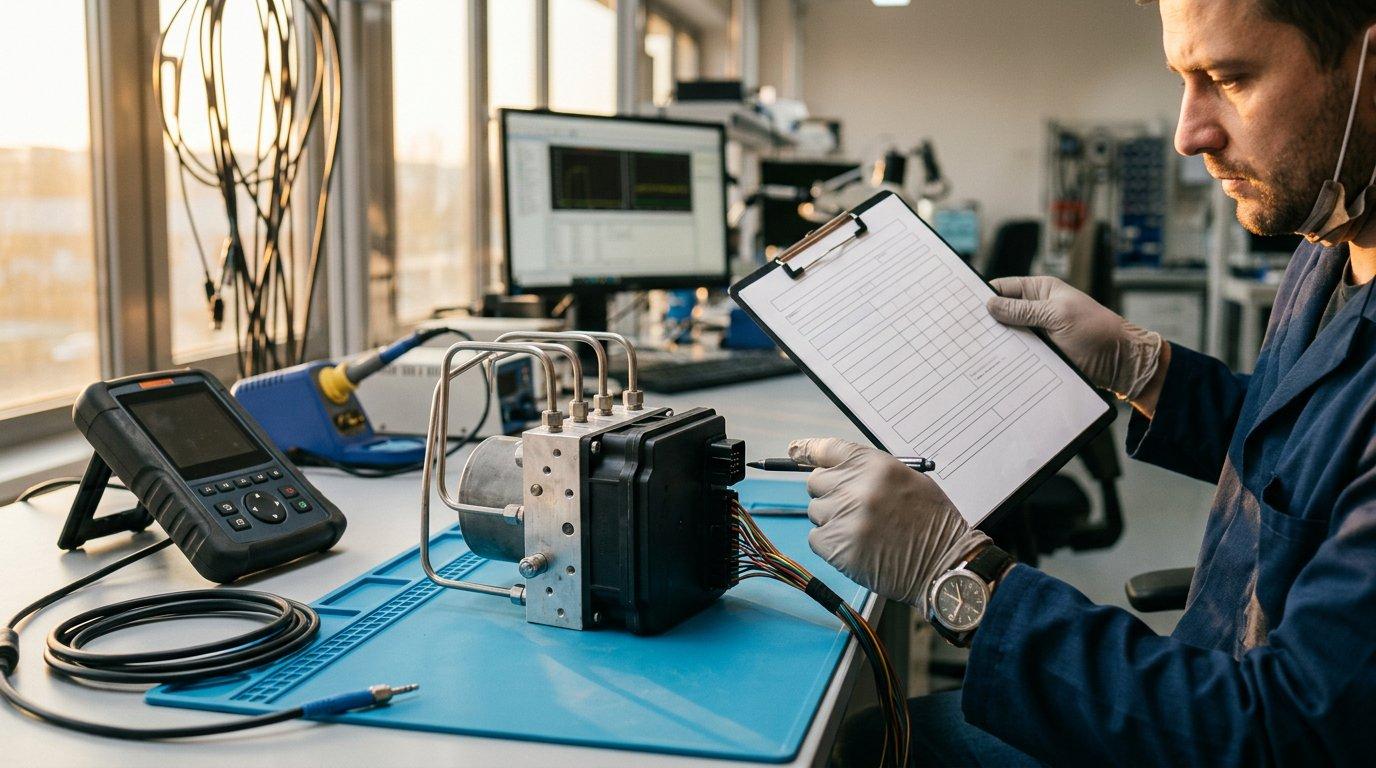
Mail-in ABS module repair is bench work—testing and repairing the controller outside the vehicle under controlled conditions. This service is fundamentally different from vehicle-level diagnosis, and understanding the distinction prevents mismatched expectations. A repair estimate should clarify what the bench tests and what diagnostic steps you must complete in the vehicle before shipping the module.
Bench repair evaluates the controller's internal circuits: power supply regulation, microprocessor communication, pump-motor driver circuits, solenoid valve drivers, and wheel-speed signal processing. The repair facility powers the module on the bench with known-good inputs, commands each circuit, and measures the outputs. Faults that appear on the bench—a shorted valve driver, failed voltage regulator, or corrupted memory—are repairable. The module is then tested under load, with simulated wheel-speed inputs and brake commands, to verify the repair.
The bench cannot diagnose problems in the vehicle's wiring, wheel-speed sensors, tone rings, or hydraulic components. If your ABS light is on due to a broken wheel-speed sensor wire, a damaged tone ring, or a failing pump motor in the hydraulic unit, sending the module for bench repair will not solve the problem. This is why documented fault codes are essential: codes indicating implausible wheel-speed signals from a single wheel point to a sensor issue, while codes for internal controller faults justify bench repair.
Before requesting an estimate, complete basic vehicle-level diagnostics. Check battery voltage—low voltage causes spurious ABS faults that mimic controller failures. Inspect wheel-speed sensor connectors for corrosion or damage. If you have access to live data on your scan tool, compare wheel-speed readings while slowly rolling the vehicle; all four sensors should produce similar, smooth signals. If one sensor reads zero or fluctuates wildly, address that sensor before assuming the module is faulty.
A transparent estimate request form, like the one ABS Module Lab provides, asks for your fault codes, symptoms, and any diagnostic steps you have already completed. This information lets the facility assess whether bench repair will solve your problem or whether additional vehicle-level diagnosis is needed first. If the service accepts your module without asking these questions, you risk paying for a repair that does not address the root cause.
What to Expect from a Mail-In ABS Module Repair Quote
A complete mail-in repair quote includes the starting repair price, return shipping cost, estimated bench time, warranty terms, and the facility's policy if the module proves irreparable. The quote should also clarify what you must ship, how to package it, and any vehicle-specific coding or initialization requirements after installation. ABS Module Lab provides this information upfront, either through their online part-number lookup or by confirming the module from a photo before you ship.
The starting repair price reflects the minimum cost for typical failures within that module family. For most ABS units, ABS Module Lab quotes a starting price of $499 plus return shipping (from $29.95). This price covers testing and repair of common circuit-board failures—solder joint cracks, failed transistors in driver circuits, or corroded connectors. If the bench discovers more extensive damage, such as a failed microprocessor or severe board corrosion, the facility contacts you with an additional cost quote before proceeding. You approve any additional charges; nothing happens without your explicit consent.
Quotes for specialized modules start differently. Toyota and Lexus hybrid brake actuators and Mercedes SBC units are more complex assemblies with high-pressure accumulators and integrated pump/valve systems. These require a free quote before any work because the repair scope varies widely depending on the failure mode. If your module falls into this category, the facility will ask for photos of the unit and your fault codes before providing a price.
Return shipping cost depends on the shipping speed you select, not on your state. ABS Module Lab provides a prepaid label to their lab (included in the service), and return shipping is added to your invoice: $29.95 for standard return shipping (3–5 business days), $54.95 for UPS 2nd Day Air or $94.95 for UPS Next Day Air. If you are located far from the lab's Texas location, such as in North Dakota or Illinois, the price is the same and only the transit time differs.
Turnaround time is about 1 week on the bench for standard service. This clock starts when your module arrives at the lab, not when you ship it. Add your outbound shipping time (typically 2-5 business days via ground) and return shipping time to estimate total vehicle downtime. Rush service cuts bench time to 2-3 business days for an additional $100, useful when your vehicle is your only transportation or when a customer's vehicle is occupying a service bay.
Common Pitfalls and Red Flags in ABS Module Estimates
Not all mail-in ABS module repair services operate transparently, and certain red flags in an estimate suggest problems ahead. Recognizing these pitfalls protects you from paying for a repair that does not solve your issue, receiving a module that requires unexpected dealer programming, or facing surprise charges after your part arrives at the facility.
Quotes without a part number. If a service quotes a repair price without confirming your exact part number, they cannot guarantee the price or the compatibility of a refurbished replacement. ABS modules vary significantly even within the same vehicle model—different engine options, transmission types, and trim levels often use different module families with distinct internal hardware. A legitimate estimate request always starts with part-number confirmation.
No fault-code inquiry. A facility that accepts your module without asking for fault codes is either inexperienced or operating a high-volume, low-quality service. Bench repair cannot fix a vehicle wiring problem or sensor failure, and reputable services screen estimate requests to ensure the symptom pattern matches a controller fault. If the service does not ask for codes, they may repair and return a module that does not solve your problem—leaving you with a bill and an ABS light still on.
Unclear policy on irreparable modules. Ask explicitly what happens if your module cannot be repaired before you ship. The answer should be a clear choice: a refurbished replacement programmed with your data at a quoted price (with you paying only the difference), or a refund of your repair cost minus shipping. Services that respond vaguely, refuse to commit to a policy, or mention "diagnostic fees" or "evaluation charges" that you must pay even if no repair occurs are red flags.
Refurbished units requiring dealer programming. Some services offer refurbished replacements at competitive prices but do not mention that the unit arrives blank—not coded to your vehicle. You then face a dealer visit for programming, often costing $150 to $300 in addition to the replacement cost. Confirm explicitly whether the replacement comes with your VIN and coding already installed. ABS Module Lab clones your data onto the refurbished unit so it installs without dealer programming, though some vehicles still need initialization procedures your vehicle's manual describes.
Unusually low prices without caveats. If a quote seems far below market—repair for $200 or refurbished units for $400—read the fine print. These services may quote core charges separately, charge extra for coding, or exclude return shipping from the advertised price. They may also lack the equipment to test modules properly, leading to high failure rates after installation. Established services price transparently: starting prices with clear explanations of what costs extra and under what circumstances.
No warranty or very short warranty periods. ABS module repairs should carry at least a 1-year warranty covering parts and the bench work. A 30-day or 90-day warranty suggests the service lacks confidence in their repairs or uses substandard components. Verify the warranty length, what it covers, and the claim process before shipping your module.
Preparing Your Module for Shipment and Getting the Estimate
Once you have documented your part number, fault codes, and vehicle symptoms, preparing the module for shipment and finalizing the estimate is straightforward. Take a clear photograph of the module label showing the full part number—most mail-in services, including ABS Module Lab, confirm the unit and provide a shipping label after you submit this photo and your vehicle information through their online form or by text.
Before removing the module from your vehicle, photograph the installed position, connector orientations, and brake-line routing. ABS modules in Chevrolet and Ford vehicles, among others, often have multiple connectors that must be reinstalled in the correct positions. Labeling connectors and taking reference photos prevents installation errors when your repaired module returns. Some modules require specific brake-line capping after removal to prevent fluid loss—confirm this with the repair facility before disconnecting anything.
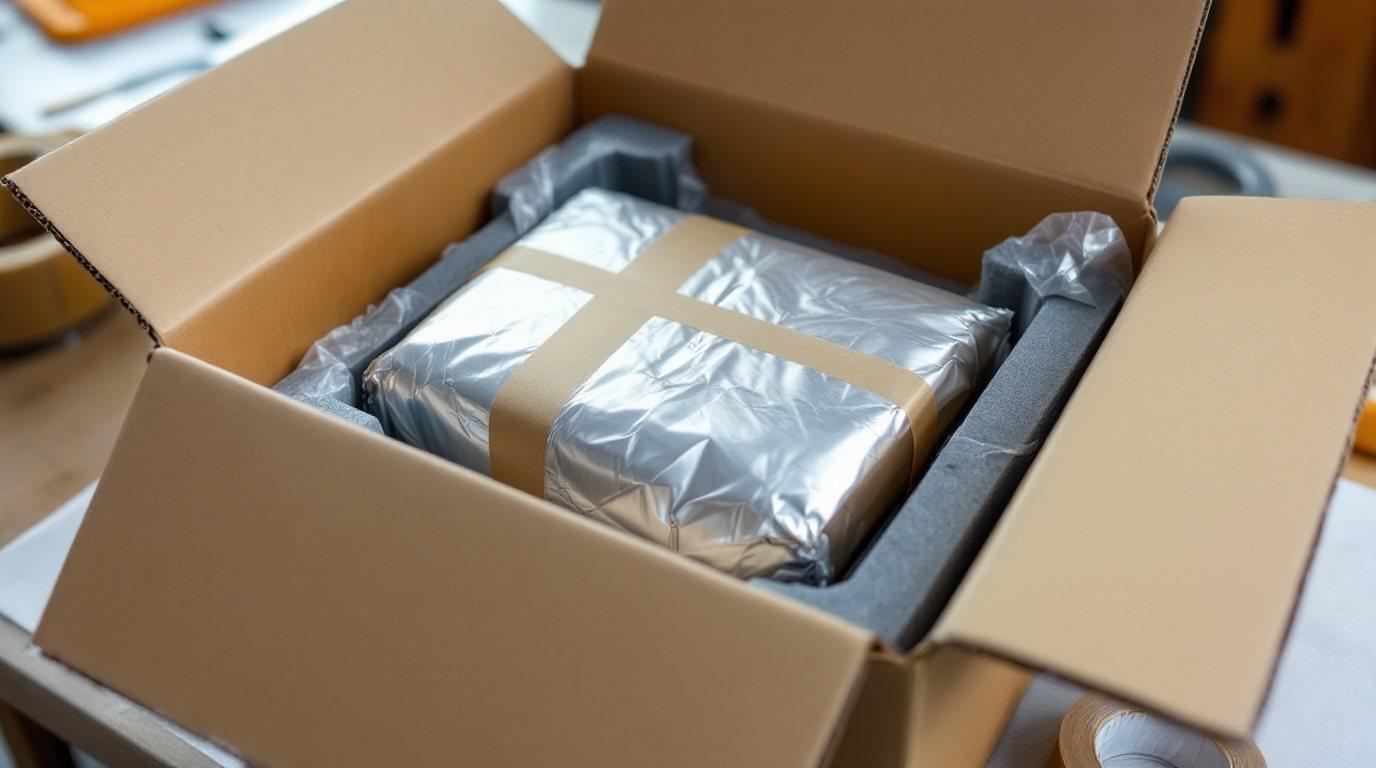
Package the module securely with bubble wrap or foam, protecting connector pins and the circuit board area from impact. Ship the unit in a box, not a padded envelope, with enough cushioning that the module cannot move inside the box during transit. The repair facility will provide a prepaid shipping label to their lab; you typically pay return shipping as part of the invoice. If your module includes a large hydraulic assembly, confirm which components to ship—some units require only the control board, while others need the complete pump and valve assembly.
After the module arrives at the lab, expect a confirmation email or call within 1 business day. The facility inspects the unit, verifies it matches the part number you provided, and performs initial bench tests. If the bench finds damage beyond the quoted repair scope—such as severe corrosion, physical impact damage, or multiple failed circuits—you receive a revised quote before any additional work begins. You approve or decline the additional cost; if you decline, the module is returned with a refund of the repair cost minus shipping, per the facility's stated policy.
If the module is repairable within the original scope, the bench proceeds with the repair, tests all circuits, and verifies communication, pump-motor function, and valve operation. The module is then packaged with your original coding intact and shipped back via the method you selected. Upon arrival, install the module following your reference photos, perform any required initialization (such as a steering-angle sensor calibration or brake bleed), and clear codes. The ABS light should extinguish after a successful self-test. If the light remains on or codes return, contact the repair facility immediately—the warranty covers bench failures, and reputable services address these issues promptly.
Frequently Asked Questions About ABS Module Repair Estimates
How do I find the part number on my ABS module? The part number appears on a label affixed to the module itself, not in your owner's manual or service records. The label location varies by manufacturer: on some units it is on the control board housing, on others it is on the hydraulic pump assembly. Before removing the module, photograph all sides to locate the label. If you cannot access the label without removing the module, some repair facilities offer free identification from a photo of the installed unit and your VIN.
Can I get an estimate without fault codes? Most reputable services require fault codes before providing a firm estimate because codes indicate whether your symptom matches a repairable controller fault. A facility may provide a general price range for your module family, but a complete estimate includes assessment of your specific codes and symptoms. If you do not have access to a scan tool, some auto parts stores offer free code reading, though you need a tool that reads ABS-specific codes, not just generic OBD-II powertrain codes.
What is the difference between a repair and a refurbished replacement? A repair returns your original module with failed components replaced and circuits tested. A refurbished replacement is a different physical unit from the same module family, repaired and tested by the facility, with your VIN and coding cloned from your original onto the replacement. Both options should come back ready to install with the same warranty. Refurbished units are used when your original module has damage beyond economical repair—severe corrosion, cracked circuit boards, or failed components no longer available.
Do I need dealer programming after installation? If the repair facility clones your VIN and coding onto the repaired or refurbished module, dealer programming is not required. ABS Module Lab performs this cloning so their modules install without a programming visit. However, some vehicles require initialization or calibration procedures after ABS module installation—these are not programming but rather self-test or sensor-learning routines. Examples include steering-angle sensor calibration (performed by turning the wheel lock-to-lock with the ignition on) or brake-system initialization (performed by driving the vehicle through specific speed and brake conditions). Your vehicle's service manual or the repair facility will inform you if these procedures are necessary.
What if my module is not listed on the repair facility's website? Contact the facility with your part number and VIN. Many modules are repairable even if not listed on the website, and the facility can confirm compatibility and provide a quote. Specialized units—hybrid brake actuators, Mercedes SBC modules, or rare controller families—typically require a custom quote. ABS Module Lab offers free module confirmation and quotes for unlisted units; some module types may require different bench procedures or longer repair times, which the quote will reflect.
Conclusion
A complete ABS module repair estimate checklist includes your module's exact part number, documented fault codes with descriptions, and answers to critical questions about repair scope, irreparable-module policies, and warranty terms. These three elements prevent the most common delays and surprises in mail-in ABS module repair: mismatched parts, unapproved charges, and modules returned without solving the original fault.
Before shipping your module, photograph the label clearly, record all active and stored codes from an ABS-capable scan tool, and confirm the facility's policy if your module cannot be repaired. Ask explicitly whether a refurbished replacement comes coded to your vehicle or requires dealer programming, and verify the warranty length and coverage. Services like ABS Module Lab that provide transparent answers, starting prices with clear conditions, and free module confirmation before you ship are distinguishable from those that surprise you with costs after your part arrives.
If you are ready to request an estimate, locate your module's part number and document your fault codes. ABS Module Lab offers free module confirmation from a photo and provides repair estimates online for most module families, with specialized units quoted individually. For modules not repairable through mail-in service, the lab also offers refurbished ABS modules programmed with your vehicle data as an alternative to new-unit pricing. Contact ABS Module Lab at (817) 505-4201, text a photo of your module label, or submit your information online to receive a complete estimate with no obligation.