Honda Accord, Pilot and Odyssey VSA Modulator Failure: Repair Guide
ABS Module Lab Team · · updated · 16 min read
What fails in the Honda Accord, Pilot and Odyssey VSA modulator, the two-digit codes a Honda scan shows, what repair or a new unit costs, and how to ship it.
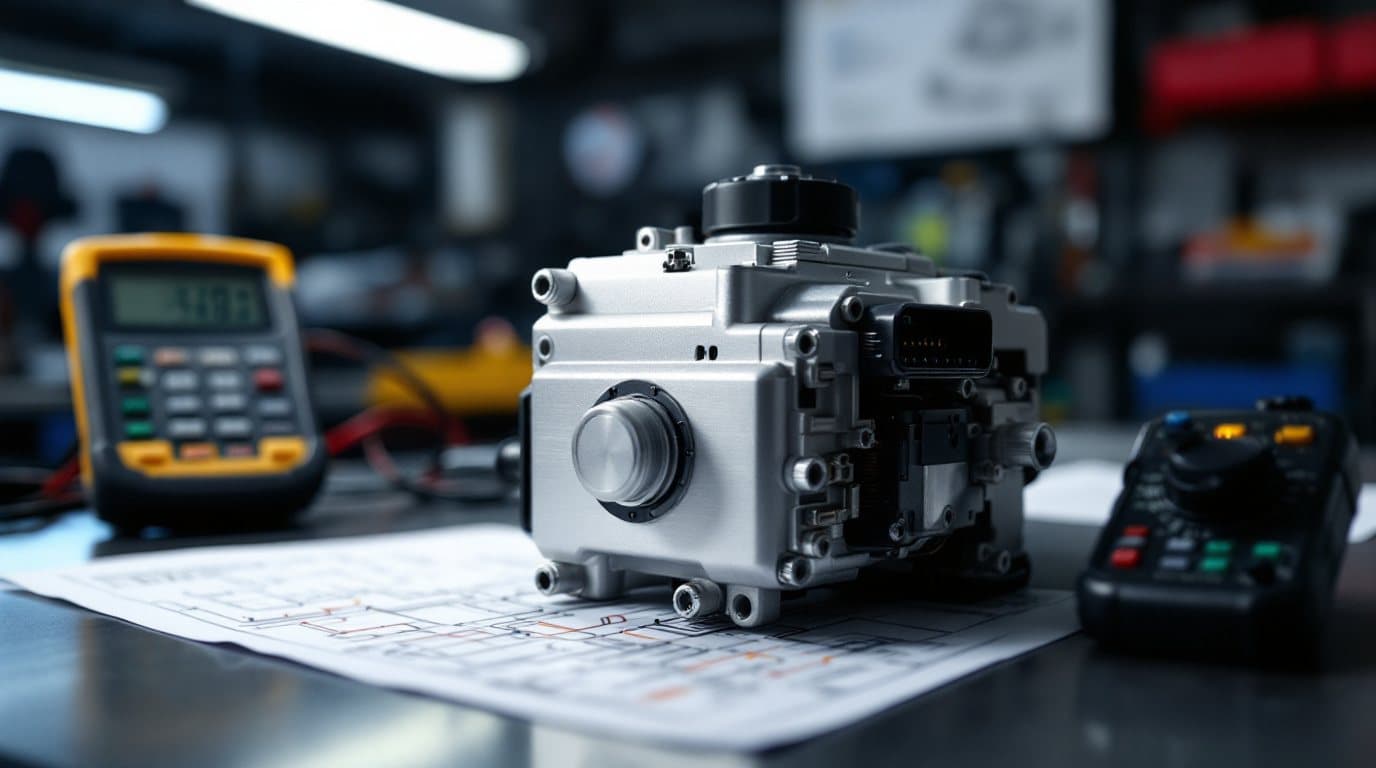
The VSA modulator on a 2008–2017 Accord, a 2009–2015 Pilot or a 2011–2017 Odyssey usually fails inside the control unit on top of the hydraulic block, and because Honda sells the modulator only as one assembly, the dealer answer is a new unit at roughly $843 to $2,656 list before labor and a brake bleed. Repairing your own modulator on the bench starts at $499 and leaves its coding in place; a refurbished modulator programmed with your data starts at $950. Read the codes with a Honda-capable scan tool first, because two Odyssey codes are cured by a software update, not a part.
Which Accord, Pilot and Odyssey models have this VSA modulator
Honda calls the ABS and stability unit the VSA modulator (Vehicle Stability Assist): pump motor, valve block and modulator-control unit built as one assembly and sold under a single service number. Every vehicle below belongs to the Honda / Acura VSA modulator family, with one exception noted.
Accord
The 2008–2012 Accord sedan and coupe (8th generation) uses a Nissin VSA modulator, an integrated hydraulic unit and control unit that Honda's catalog lists as a VSA modulator assembly marked "Rewritable": 57110-TA0-305 for the 2008–2010 sedan with the automatic, 57110-TA0-306 for the manual and 57110-TA0-A72 for 2011–2012.
The 2013–2017 Accord (9th generation) keeps a Nissin modulator under 57110-T2F numbers split by trim and transmission, and the 2016–2017 Sport with the CVT moved to 57111-T2F-X73. The Accord Hybrid uses an electric-servo brake system; treat its 57110-T2G numbers as unconfirmed for a standard repair. The 2010–2015 Accord Crosstour uses the same design under 57110-T3L, T3M and TP6 numbers.
The 2005–2007 Accord V6 (7th generation) has a VSA modulator with pump under 57110-SDB (sedan) and 57110-SDP (coupe) numbers; the 4-cylinder cars use an ABS-only modulator our data has no numbers for.
Pilot
The 2003–2008 Pilot (1st generation) changed units mid-run: Honda's application history, filed with NHTSA, lists a Bosch ABS 5.3 for 2003–2005 and a Nissin NK11 VSA modulator for 2005–2008. The 2003–2005 modulator is 57110-S9V-A51; the 2006–2008 4WD VSA unit is 57110-S9V-A73, now service number 04571-S9V-A71.
The 2009–2015 Pilot (2nd generation) uses a Nissin modulator, 57110-SZA-A03 for the 2009–2011 4WD and 57110-SZA-A12 for 2012–2015 (now 04571-SZA-A01 and -A11); the 57110-SZB numbers on rebuilder lists are probably the 2WD version, unconfirmed by an OEM catalog.
The 2016–2018 Pilot (3rd generation) sells its modulator under 57111-TG7 numbers, but no readable source in our data names the supplier or generation; its page sells the any-make repair at the same starting price.
Odyssey
On the 2005–2010 Odyssey (3rd generation) the 2007–2008 modulator was built by Continental Teves, according to the recall filing; the 2005–2008 service part is 57110-SHJ-A61, superseding four earlier SHJ numbers. The 2011–2017 Odyssey (4th generation) uses 57111-TK8-A03 (2011–2013) and 57111-TK8-A62 (2014–2017) as service numbers, while the sticker often reads in the 57110-TK8-A610-M1 style.
Honda does not sell the control unit separately. We repair the board on the bench, but block and pump travel with it, so the whole modulator ships.
Symptoms of a failing ABS module on the Accord, Pilot and Odyssey
On these Hondas the ABS module is the VSA modulator, and the sign of a failure inside it is a set of lamps together: ABS, VSA and the VSA activation indicator, sometimes with the brake system lamp. On the Accord and Pilot the lamps can start intermittently, lit for a drive and gone after a restart, then stay on. Heat can be the trigger, which fits a solder joint that opens as the board expands.
With the lamps on, ABS and traction control are off. Normal braking works, but the wheels can lock in a panic stop and cruise control may refuse to engage.
A pedal that feels low and soft, or sinks slowly at a stop, has a different cause. On the 2003–2006 Accord V6 and the 2007–2008 Odyssey it means air entering the brake circuit through the modulator, a hydraulic fault covered by a Honda bulletin and, on the Odyssey, a recall; a board repair will not cure it. A pump that runs continuously points at the pump-motor driver or the motor itself.
The fault codes you will see
Honda's VSA modulator-control unit stores codes in Honda's own numbering, not as SAE C-codes: a main code of two or three digits, followed on 2008 and later vehicles by a sub-code after a dash (38-11, 81-1), and on the first-generation Pilot the main numbers alone (51, 54, 81, 112). A Honda-capable scan tool shows these two-digit codes, long known as flash codes, as such; a generic OBD-II reader usually cannot read the VSA unit at all.
| Code | Meaning | What it points to |
|---|---|---|
| 38-11 | ABS solenoid valve malfunction (Accord 2008–2017, Crosstour) | A valve coil circuit, usually the coil-pin joint on the board |
| 123-11 | VSA solenoid valve malfunction (same cars) | The VSA regulator or suction valve circuit, same cause |
| 85-01 | Problem in VSA system (Accord 2008–2017) | A general fault stored beside a specific one |
| 86-14 | F-CAN communication with gauge control module malfunction (Accord 2008–2017) | The CAN link to the cluster; wiring and cluster first |
| U0155 | Lost communication with gauge control module (Accord 2013–2017) | The same link, SAE format |
| 32-11 to 38-11 | ABS solenoid valve malfunctions (Pilot 2009–2015) | An inlet or outlet valve circuit |
| 121-11 to 124-11 | VSA solenoid valve malfunctions (Pilot 2009–2015) | The front VSA valve circuits |
| 66-11, 66-13 | Pressure sensor issues (Pilot 2009–2015) | The pressure sensor in the modulator |
| 81-19 | Yaw rate sensor (Pilot 2009–2015) | The yaw sensor or its link, not the board |
| 81-1 | VSA modulator-control unit internal circuit malfunction (Odyssey 2011–2015, Service Bulletin 16-005) | Software sensitive to low voltage; a reflash, not a repair |
| 61-1 | VSA modulator-control unit power source circuit (IG) low voltage (Odyssey, SB 16-005) | Battery and charging, then the bulletin |
| 31 to 38 | Inlet or outlet valve solenoid coil open or short, one pair per wheel (Pilot 2005–2008) | A valve coil per wheel |
| 121 to 124 | VSA regulator or suction valve coil open or short, front wheels (Pilot 2005–2008) | The VSA valve circuits |
| 81 / 51 / 54 / 112 | Pilot 2005–2008: control unit failure (microprocessor, memory or circuit); pump motor lock or overheat; fail-safe relay failure; control unit power supply error | The control unit, the pump, the internal relay and the power feed |
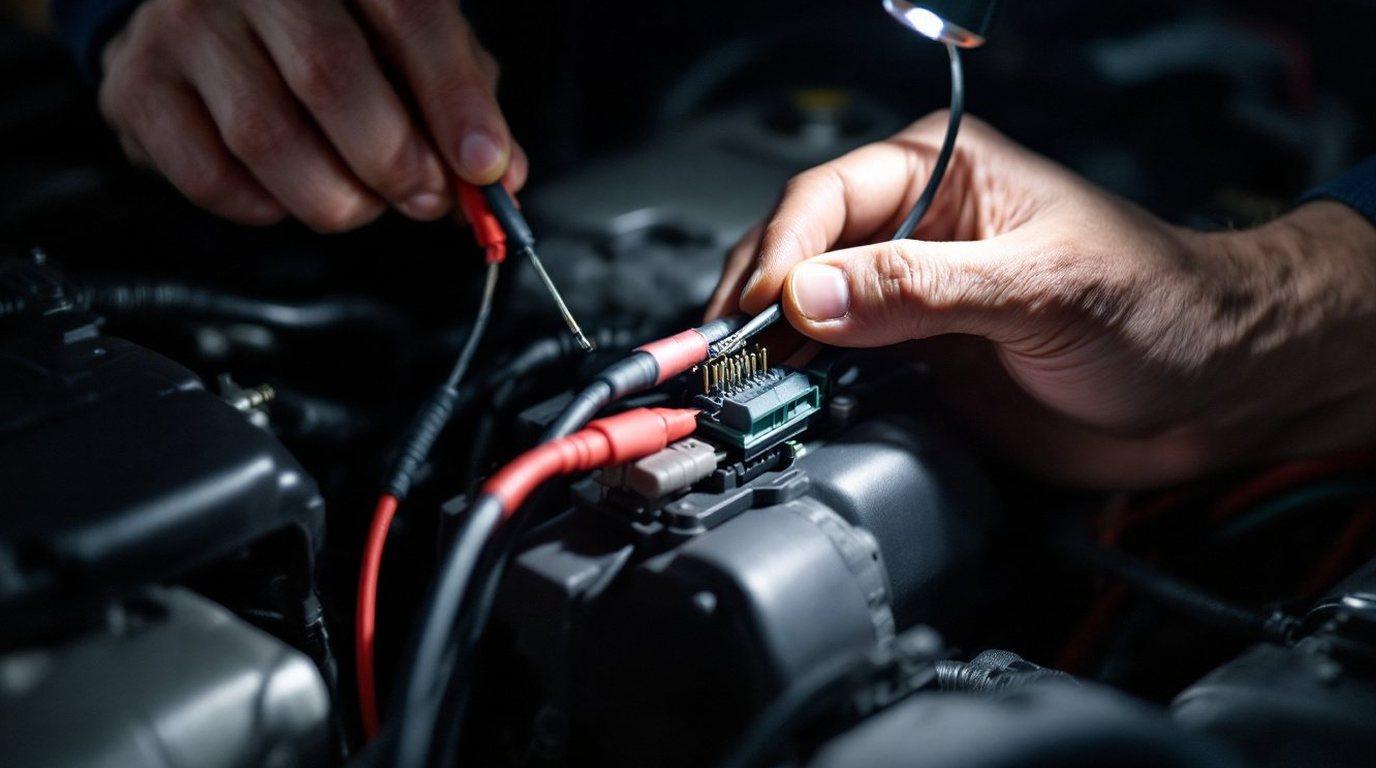
One case stands on its own: the tool cannot communicate with the VSA modulator at all, other modules store a U-code pointing at it and the VSA menu times out. That is a dead control unit or a dead feed to it. Check the VSA fuses, the ground and the big connector; power and ground present at the connector with no answer means the control unit is the fault.
Why these modules fail
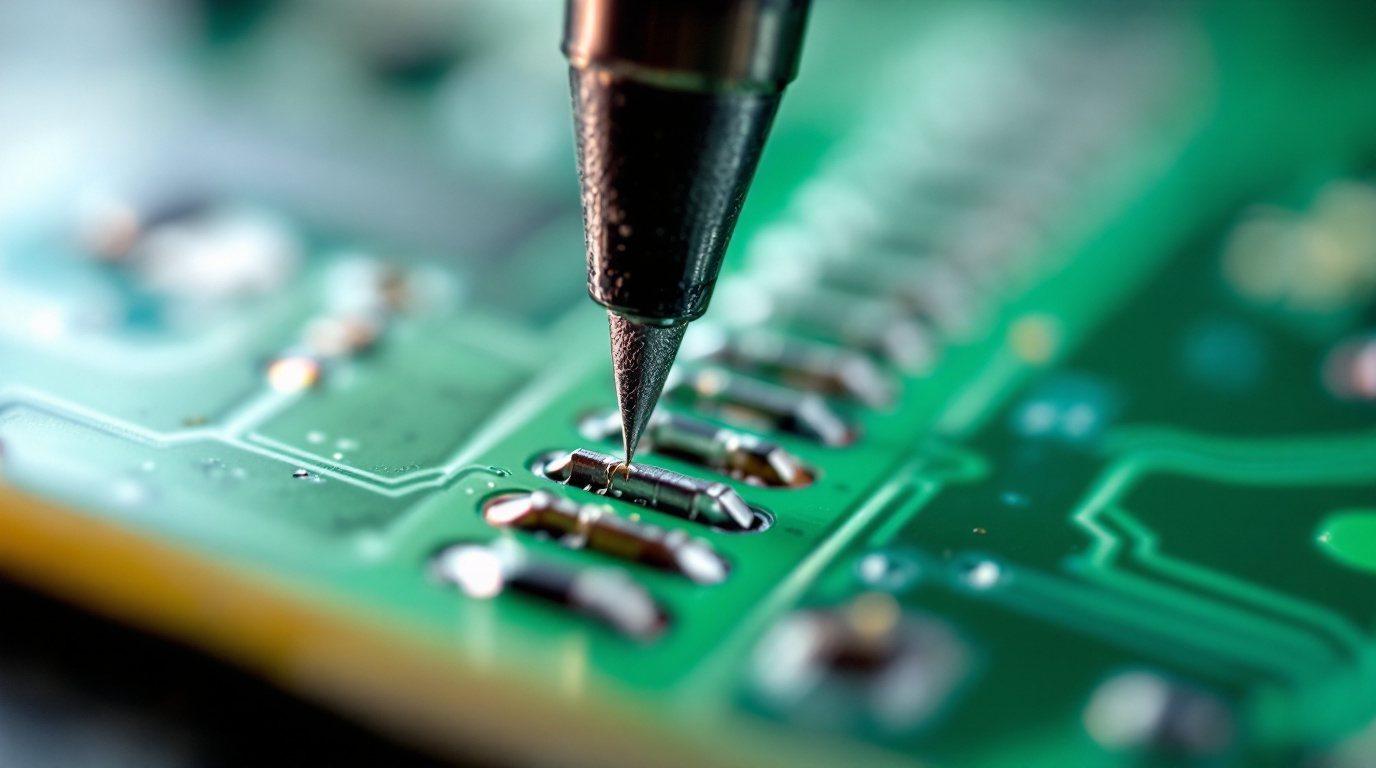
For the 2008–2017 Accord, the Crosstour and the 2009–2015 Pilot, the documented failure is fatigue inside the control unit: the solder joints between the solenoid-valve wiring and the circuit board crack after years of heat cycling, vibration and thermal stress. An open joint reads as an open coil (the 38-11 and 123-11 codes), and one that opens only hot gives the intermittent pattern above; the repair rebuilds the joints and checks every coil circuit under load.
The older Hondas here fail differently, and a board repair cannot fix a hydraulic fault:
- 2003–2006 Accord V6 and early 2007: the modulator-control unit leaks air into the brake system; the pedal sits low and soft, a manual bleed restores it for a while, and Honda's bulletin replaces the assembly when the bleed test confirms it.
- 2007–2008 Odyssey (and Element): air slowly enters the modulator and the pedal sinks over time; bleeding helps only until air re-enters. This was a recall. The same vans had recall 13V-500 for unexpected VSA braking from yaw-rate calibration, remedied with an updated yaw sensor, not the modulator.
- 2005 Pilot: recall 13V-092 says the VSA control unit may have been damaged in manufacturing and can apply braking without the pedal pressed; some units also had a VSA connector bolt not tightened to spec. That is a dealer job under the recall.
- 2011–2014 Odyssey and early 2015: Service Bulletin 16-005 ties VSA codes 81-1 and 61-1 to software that is sensitive to low battery voltage; the fix is a software update plus a sensor neutral-position memorization, not hardware.
Everything else sets different codes: a wheel-speed sensor, its wiring or a rusty tone ring sets a code for one wheel, a weak battery sets low-voltage codes, and the pump motor can wear out on its own. The control unit is the right suspect when the code names a valve circuit, the internal circuit, the fail-safe relay or the pump driver, or when nothing answers on the bus.
Check these before you condemn the module
Each can save you a shipment.
- Battery and charging. A weak battery or erratic charging voltage sets low-voltage VSA codes on its own; fix that first.
- Fuses. The modulator has a small fuse for the control unit and a large one for the pump and valves; a blown motor fuse looks exactly like a dead module. Check both with a meter.
- Grounds. The modulator's ground strap and the nearby body grounds corrode, and a high-resistance ground gives power-supply codes such as 112 and random communication drops.
- The connector. Unplug the big connector with the key off and look for corrosion, a pushed-back pin or water in the shell; all are fixable without a new modulator.
- Wheel-speed live data. Drive slowly and watch all four wheel speeds. One wheel that reads zero, drops out or lags is a sensor, wiring or tone-ring fault; a valve code with four clean speeds points back at the modulator.
- The communication test. If the tool will not talk to the VSA unit, confirm with a meter that its power and ground pins are live at the connector. Power present and no answer means the module; no power means wiring.
- Recalls and bulletins. Check the VIN at the NHTSA recall site; a 2005 Pilot under 13V-092, a 2007–2008 Odyssey under its recall or a 2011–2015 Odyssey with 81-1 or 61-1 goes to the dealer first.
- A soft pedal. A low or sinking pedal rather than lamps is hydraulic: have the system bled, and if the pedal sinks again over days the modulator is admitting air and needs an assembly.
When the lamps are on with a valve, internal or pump-driver code and these checks come back clean, the modulator's control unit is where the fault is.
Repair, refurbished, used or new: what each really costs
Every figure here is a starting price; should the bench find work beyond what the service covers, you get the cost first and nothing happens until you approve it.
| Route | From | What you receive | After installation |
|---|---|---|---|
| Repair of your modulator | From $499 | Your own modulator, board repaired at component level and tested, coding untouched; 1-year warranty | Brake bleed (the lines were opened), clear codes, drive |
| Refurbished modulator with your data | From $950 | A modulator of the same family, written with the VIN, coding and configuration read from yours; your original is kept as the core; 1-year warranty | As above |
| Used modulator | Varies | An assembly of unknown history coded to another car; a prefix match can still be the wrong trim or transmission version | Dealer coding and a bleed |
| New modulator from Honda | $842.95 to $2,655.78 list, by model | A new assembly with Honda's parts warranty | Installation, a bleed and dealer programming of a unit Honda labels "Rewritable" |
Dealer catalog list prices in our data: 57111-TK8-A62 (2014–2017 Odyssey) $842.95; 57110-T2F-L42 (2014–2015 Accord Sport) $1,203.17; 57110-SHJ-A61 (2005–2008 Odyssey) $1,282.80; 57110-TA0-305 (2008–2010 Accord) $1,309.89; 57110-SZA-A12 (2012–2015 Pilot) $1,975.19; 57110-S9V-A73 (2006–2008 Pilot) $2,655.78.
Return shipping is charged at checkout in three tiers: UPS Next Day Air ($94.95), UPS 2nd Day Air ($54.95) and standard delivery ($29.95, 3–5 business days). The prepaid label that brings the modulator to us is included; making it UPS 2nd Day Air costs $55. Standard bench time is about a week, and rush repair ($100) puts your modulator at the front of the queue and returns it in 2–3 business days. A 1-year warranty comes with each repair and refurbished unit, and the warranty page says what is covered.
If your modulator is beyond repair, we stop and tell you, then you decide: a refurbished modulator written with your data, from $950, where you pay only the gap between that and what you have already paid (we confirm the figure first), or your modulator back and the repair price refunded, less shipping and a $150 bench evaluation fee. There is no advance exchange, because your data is read out of your original before a refurbished unit can be written. Both services are on the Honda VSA family page; start a repair or request a quote if you want the label read first.
Removing and shipping the module
On these Hondas the whole VSA modulator ships, pump and block included, because Honda does not sell the control unit alone, so the brake lines come off.
- Brakes are a safety system. If you have not opened a brake line before, have a shop remove and refit the modulator; the vehicle cannot be driven with it out.
- Disconnect the battery negative terminal before unplugging the connector.
- Photograph the label first; on the Odyssey and Pilot the sticker number (57110-xxx-A610-M1 style) differs from the service number.
- Mark each line and its port before loosening, and use a flare-nut wrench; the steel lines round off easily.
- Cap every open port and plug every open line so dirt stays out and the master cylinder does not run dry.
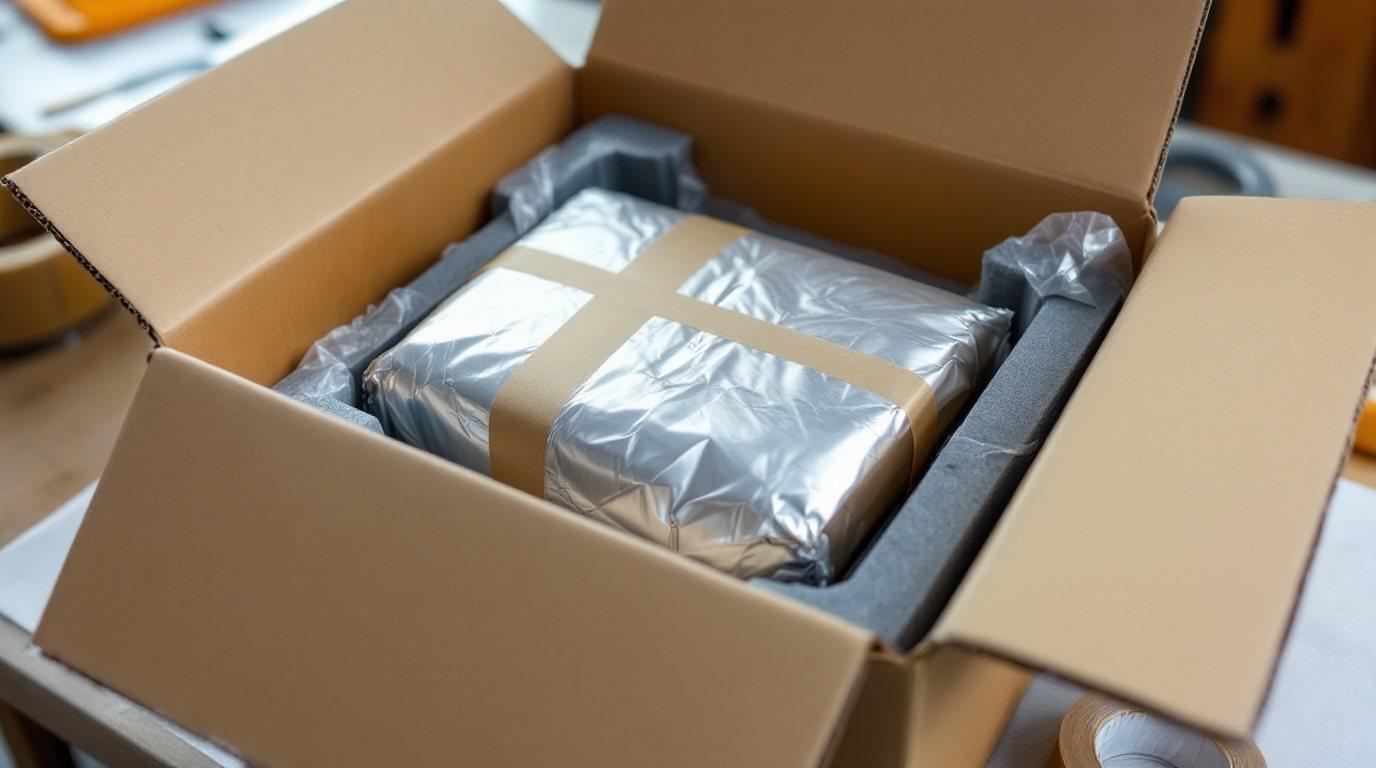
- Bag the unit so residual fluid stays off the box, wrap it in bubble wrap and pack it with two inches of padding.
- Print the prepaid label from your confirmation email, write the RMA on the box and drop it at the carrier. The mail-in instructions illustrate each step.
What happens at the bench
Your modulator is logged in under its RMA, its label photographed, and then it goes onto a fixture that powers the control unit, reads what it has stored and works the pump and every valve coil under load. On a Nissin unit the technician is looking for the cracked coil-pin joints; the board is repaired at component level, the same test sequence is run a second time, and the modulator is boxed for return with its own coding still inside. If it cannot be saved, work stops and we contact you before going further. The how it works page walks through the whole flow.
After it is back in the car
Fit the modulator, torque the line fittings, reconnect the connector and the battery, and bleed the brakes. Because the lines were opened, a bleed is not optional: follow Honda's bleeding procedure for the modulator, including any scan-tool step it calls for, since a pedal-only bleed can leave the pedal low. Clear the codes in the VSA unit and in any module that logged a loss of communication, then drive so the VSA self-check runs. Some vehicles still need a brake bleed, initialization or calibration after install, but your repaired modulator keeps its coding, so no dealer programming is needed for the unit itself.
Part numbers for the Accord, Pilot and Odyssey
The service number and the label number can differ, and Honda replaced several of these with 04571 service kits. Type whatever is on your sticker into the part-number lookup; it matches on the base number, so a sticker with a different suffix still lands on the right family.
| Part number | Fits | Note |
|---|---|---|
| 57110-TA0-305 | 2008–2010 Accord sedan LX/EX/EX-L incl. PZEV, 5AT | Rewritable; replaces 57110-TA0-A53 |
| 57110-TA0-A72 | 2011–2012 Accord sedan LX/SE/EX/EX-L, 5AT | Replaces 57110-TA0-415 |
| 57110-T2F-L42 | 2014–2015 Accord Sport, 6MT | Replaces 57110-T2F-L41; replaced by 04571-T2F-L41 |
| 57111-T2F-X73 | 2016–2017 Accord Sport, CVT | 57111 prefix; replaces 57111-T2F-X70, -X71, -X72 |
| 57110-SDB-A34 | 2006–2007 Accord V6 sedan, A/T | Supersedes 57110-SDB-A33; coupe numbers are 57110-SDP |
| 57110-SHJ-A61 | 2005–2008 Odyssey LX/EX/EX-L/EXL-T, 5AT | Replaces 57110-SHJ-964, -951, -962, -963 |
| 57111-TK8-A03 | 2011–2013 Odyssey LX/EX/EX-L, 5AT | Replaces 57111-TK8-A02, -A01 |
| 57111-TK8-A62 | 2014–2017 Odyssey LX/EX/EX-L/SE/Touring, 6AT | Rewritable; supersedes -A61, -A60; label often reads 57110-TK8-A610-M1 |
| 57110-S9V-A73 | 2006–2008 Pilot 4WD EX/EX-L/LX, 5AT | Replaced by 04571-S9V-A71 |
| 57110-SZA-A03 | 2009–2011 Pilot 4WD EX/EX-L/LX/Touring, 5AT | Replaced by 04571-SZA-A01; 2012–2015 is 57110-SZA-A12 |
| 57111-TG7-A24 | 2016–2018 Pilot Elite AWD and Touring AWD, 9AT | Rewritable; supersedes 57111-TG7-A21, -A22, -A23 |
FAQ
How much does it cost to fix a Honda VSA modulator?
A bench repair of your own modulator starts at $499 plus return shipping from $29.95; a refurbished modulator with your data starts at $950. A new assembly from Honda lists between about $843 and $2,656 by model, before installation, bleeding and programming.
Can the VSA modulator be repaired instead of replaced?
On the Nissin units of the 2008–2017 Accord, the Crosstour and the 2009–2015 Pilot the usual fault is cracked solder joints at the valve coils, a board repair. Hydraulic faults such as the soft-pedal air leak on the 2003–2007 Accord V6 and the 2007–2008 Odyssey need an assembly, and the Odyssey's 81-1 and 61-1 under SB 16-005 need a dealer reflash.
Do I need the dealer to program the modulator after a repair?
No. A repaired modulator keeps its coding and VIN, and a refurbished unit from us is written with your data before it ships. Installation still follows Honda's procedure: the brake bleed and, on some models, the sensor neutral-position memorization.
How long will my Honda be off the road?
Count on roughly a week at the bench, or 2–3 business days if you add the $100 rush option, plus ground transit to Arlington, Texas and the return speed you pick, 3–5 business days at the standard rate. The vehicle cannot be driven with the lines open.
Is it safe to drive with the ABS and VSA lights on?
The base brakes work, but ABS and stability control do not, so a hard stop can skid; drive gently to a shop if you must, and not at all if the pedal is low, soft or sinking.
What if my modulator cannot be repaired?
We tell you before doing anything else. You can take a refurbished modulator of the same family, written with your data, from $950, owing only the difference between that and what you have paid once we confirm it, or have the modulator returned and the repair price refunded minus the shipping and a $150 bench evaluation fee.
What does the warranty cover?
One year from the day the modulator ships back, covering the repair we did, not sensors, wiring or electrical damage from outside the unit. The year is included with each repair and each refurbished unit, and shipping on a claim is paid by you in both directions.
My Odyssey shows 81-1. Do I need a new modulator?
Probably not. Honda Service Bulletin 16-005 ties 81-1 and 61-1 on 2011–2014 and early 2015 vans to software sensitive to low battery voltage, remedied by a software update and a sensor neutral-position memorization. Test the battery, then ask a Honda dealer about the bulletin first.
Sources
- Honda's response to NHTSA petition DP12-002: Pilot modulator history, drawing numbers and the VSA code list — static.nhtsa.gov
- NHTSA recall 13V-092, 2005 Pilot VSA control unit — static.nhtsa.gov
- NHTSA recall 13V-500, 2007–2008 Odyssey VSA modulator — static.nhtsa.gov
- Honda Service Bulletin 16-005, 2011–2015 Odyssey codes 81-1 and 61-1 — static.nhtsa.gov
- NHTSA investigation files DP10-004 and PE09-024, Accord V6 soft pedal and Honda's part-number tables — DP10-004, PE09-024
- Honda online dealer parts catalog pages for the part numbers and list prices — 57110-TA0-305, 57110-T2F-L42, 57110-SHJ-A61, 57111-TK8-A62, 57110-S9V-A73, 57110-SZA-A12, 57111-TG7-A24
- Recall report on the 2007–2008 Odyssey and Element brake modulator — cars.com
- Independent rebuilders' application lists and a write-up of the Nissin solder-joint failure; used-part listings for the label-style numbers (not linked).