Kelsey-Hayes 325 ABS Module (C0265) Repair: Silverado, Sierra, Tahoe
ABS Module Lab Team · · updated · 16 min read
The Kelsey-Hayes 325 ABS module on 1999–2006 GM trucks and SUVs: why the pump runs constantly, what C0265 means, and what the $325 repair involves.
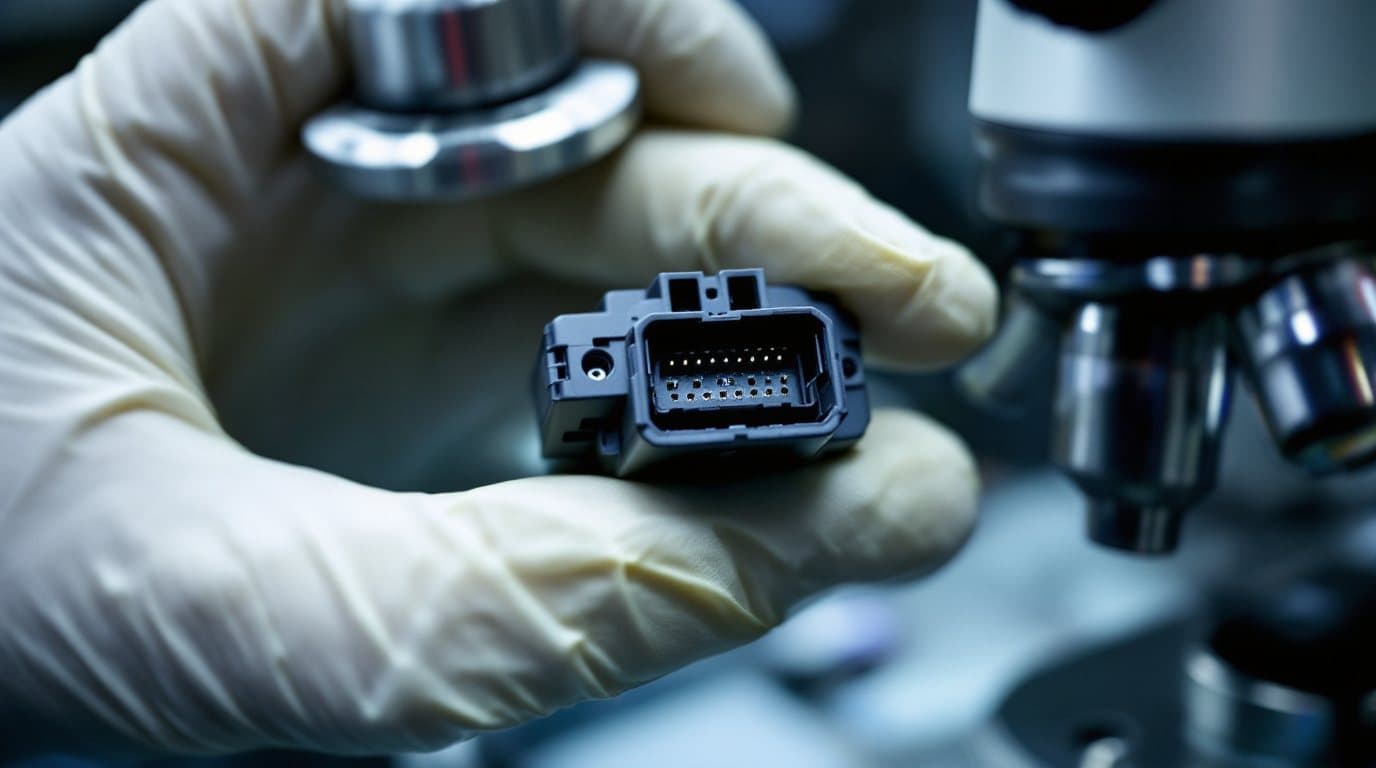
If your 1999–2006 Silverado, Sierra, Tahoe, Suburban or Yukon has an ABS pump that runs when it should not, or a C0265 stored in the brake controller, that is the common failure of the Kelsey-Hayes 325 electronic brake control module, and the module is repaired, not replaced, from $325 plus return shipping. It unbolts from the hydraulic unit on its own, so nothing hydraulic is opened and only a small box ships. Before you order, confirm the code with a tool that reads the ABS controller, pull the pump fuse if the pump is running, and check the module's ground and connector, because those two cause a share of the complaints that get blamed on the module.
Which GM trucks and SUVs have this ABS unit
The Kelsey-Hayes EBC325, usually written KH325 or "Kelsey Hayes 325 EBCM", is the brake controller on the GMT800 full-size trucks and the SUVs built from them. In our files that means the 1999–2006 Chevrolet Silverado 1500 and 2500 and GMC Sierra 1500 and 2500, the 2003–2006 Sierra Denali, the Tahoe, the Suburban 1500 and 2500, the 2000–2006 Yukon 1500 and 2500, the 2002–2007 Avalanche and the GMT800 Cadillac Escalade. The same sources place the module on the compact and mid-size trucks of the period as well: 2000–2004 S10 and Sonoma, 2000–2005 Blazer and Jimmy, Astro and Safari vans, the Envoy, and the 2003–2006 SSR. One GM list extends it to 1999–2008 trucks including the Rainier and Bravada. On this site all of those vehicles sit on one line, Chevrolet Silverado 1500 / 2500 (GMT800) 1999–2006, which also appears on the GMC and Cadillac make pages.
The same module family did duty on the 2000–2004 Ford F-150, the 2002–2004 Super Duty and 2000–2005 Excursion, and the 1998–2005 Dodge Ram, which is why the lab prices it once, as the Kelsey-Hayes EBC325 family, at the lowest repair price on the site.
One caveat from the research. StabiliTrak arrived on the Tahoe for the 2004 model year as an option (RPO JL4), and our sources do not confirm that a JL4-equipped truck carries the same KH325 box. If your truck has StabiliTrak, photograph the module label and run it through the part-number lookup before ordering; if the number is not one of ours, send the photo through the quote form and we will tell you what you have.
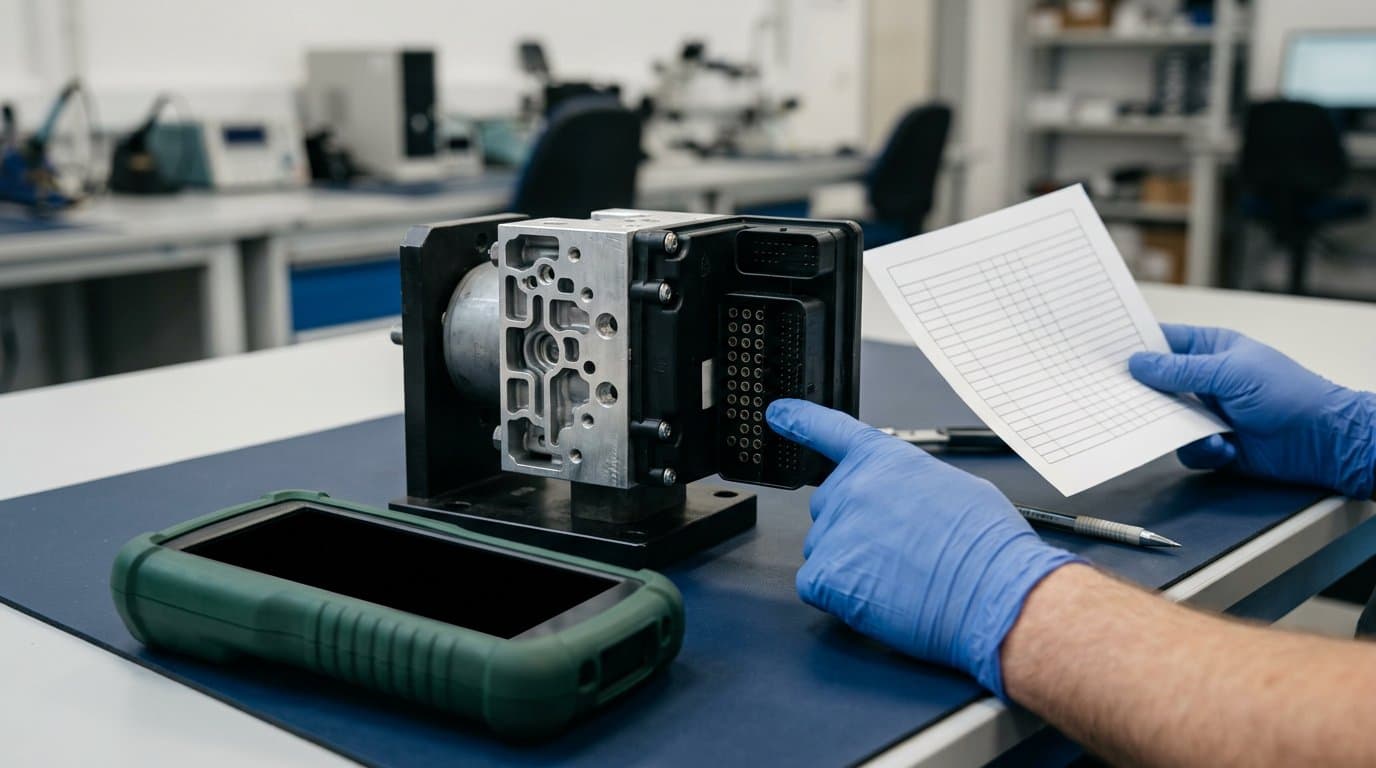
Mechanically the unit is two parts. The brake pressure modulator valve (BPMV) is the aluminum block carrying the solenoid valves and the pump motor; it is plumbed into the brake lines and bolted to the frame, low on the driver's side on most of these trucks, so you work on it from underneath. The electronic brake control module (EBCM) is the sealed plastic box bolted to the face of the BPMV with the big connector on it. The EBCM comes off the valve body on its own, and the EBCM alone is what ships to the bench.
Symptoms of a failing ABS module on the Silverado, Sierra, Tahoe and Suburban
The signature complaint is a pump motor that runs with nobody touching the brakes. It sounds like a hum or a whir from the driver's side frame area, it continues with the truck parked, and on a badly failed module it continues after the key is out. Many owners meet it as a battery that is flat every morning, or as a pump motor that has run itself hot and quit. The amber ABS lamp is on, and the scan tool shows C0265.
Alongside or instead of the pump, the lamp can simply be on with a relay or pump-circuit code stored: C0201 for the system enable relay, C0121 for the valve relay, C0267 or C0268 for the pump motor circuit. These start intermittent on many trucks, setting on a cold start or after a rough road and clearing for a while, then become permanent.
With the ABS lamp on, the truck brakes normally on the base system; what is missing is the anti-lock function and, on trucks that have them, traction control and StabiliTrak. A pedal that has changed, a lamp that says BRAKE rather than ABS, or fluid loss is a hydraulic problem, not a module problem.
One symptom that looks like a module failure and is not: ABS that activates as the truck creeps to a stop on dry pavement, pedal pulsing, stopping distance stretched. That is a wheel-speed signal problem at a wheel end, not in the module, and it is fixed there. A repaired EBCM will not change it.
The fault codes you will see
These are the codes our files tie to the KH325 on the GMT800 trucks. A tool that reads only engine codes will not show them; it has to open the EBCM.
| Code | Meaning | What it points to |
|---|---|---|
| C0265 | EBCM motor relay circuit low when on | The pump-motor relay stage inside the module; the usual code behind a pump that runs constantly |
| C0201 | ABS enable relay contact circuit | The system (enable) relay inside the module |
| C0121 | Valve relay circuit malfunction | The relay that powers the solenoid valves, also internal to the module |
| C0267 | Pump motor circuit | The pump driver in the module, or the motor and its wiring |
| C0268 | Pump motor circuit | The same circuit, the opposite fault direction |
If the scan tool cannot communicate with the EBCM, do not read that as a dead module yet. On these trucks the EBCM is powered through fuses in the underhood block and grounded through a strap to the frame, and either one corroding or opening leaves the module silent while the rest of the truck talks normally. Verify battery voltage on the module's power pins with the key on and a clean ground on its ground pins, reseat the connector and try again. A module that has both and still does not respond is a bench job, and on this family that presentation is a normal repair rather than a lost cause.
Why these modules fail
The KH325 carries its relays inside the module instead of in the fuse box: the system enable relay, the valve relay and the pump-motor relay are all on the board, driven by the module's own transistors. The pump relay is the one that works hardest and fails first. When its contacts weld or its driver shorts, the pump motor is powered continuously whether the module commands it or not, and the module logs C0265, the motor relay circuit reading low when it should not be on. The constantly running pump, the flat battery and the code are three faces of one component failure. C0201 and C0121 are the other two relay stages failing in the same way, and C0267 and C0268 are the pump driver, or what it drives, reading outside limits.
Repairing the module means replacing the relay stage and the driver components around it, checking the board for the heat damage a stuck relay leaves behind, and running the pump drive under a real load before the module goes back together. A module-only repair cannot fix a pump motor that has already cooked itself from days of running, a seized motor, or a valve fault inside the BPMV. Some codes on these trucks point at the motor or the hydraulic side rather than the board; the bench checks for that before quoting, and if your truck's pump has been running for a long time it is worth budgeting for the motor as a possibility.
What is not the module: wheel-speed sensors and the front hub bearings that carry them, the tone rings, the sensor harness along the frame, the ground strap, the battery and the charging system, and the hydraulic block. Those have their own codes and their own fixes, and they are the installer's, not the bench's.
Check these before you condemn the module
- Pull the pump fuse if the pump is running. This is the first move, before any diagnosis. It stops the battery drain and keeps the motor from burning out while you decide what to do; the base brakes work without it.
- Fuses. Test the ABS fuses in the underhood block with a test light. An open fuse explains a silent module as well as anything inside it.
- The frame ground. The EBCM ground strap sits in the salt and water that collects on the frame. Clean it to bright metal, tighten it, and do a voltage-drop test from the module ground pin to the battery negative while the pump is commanded on.
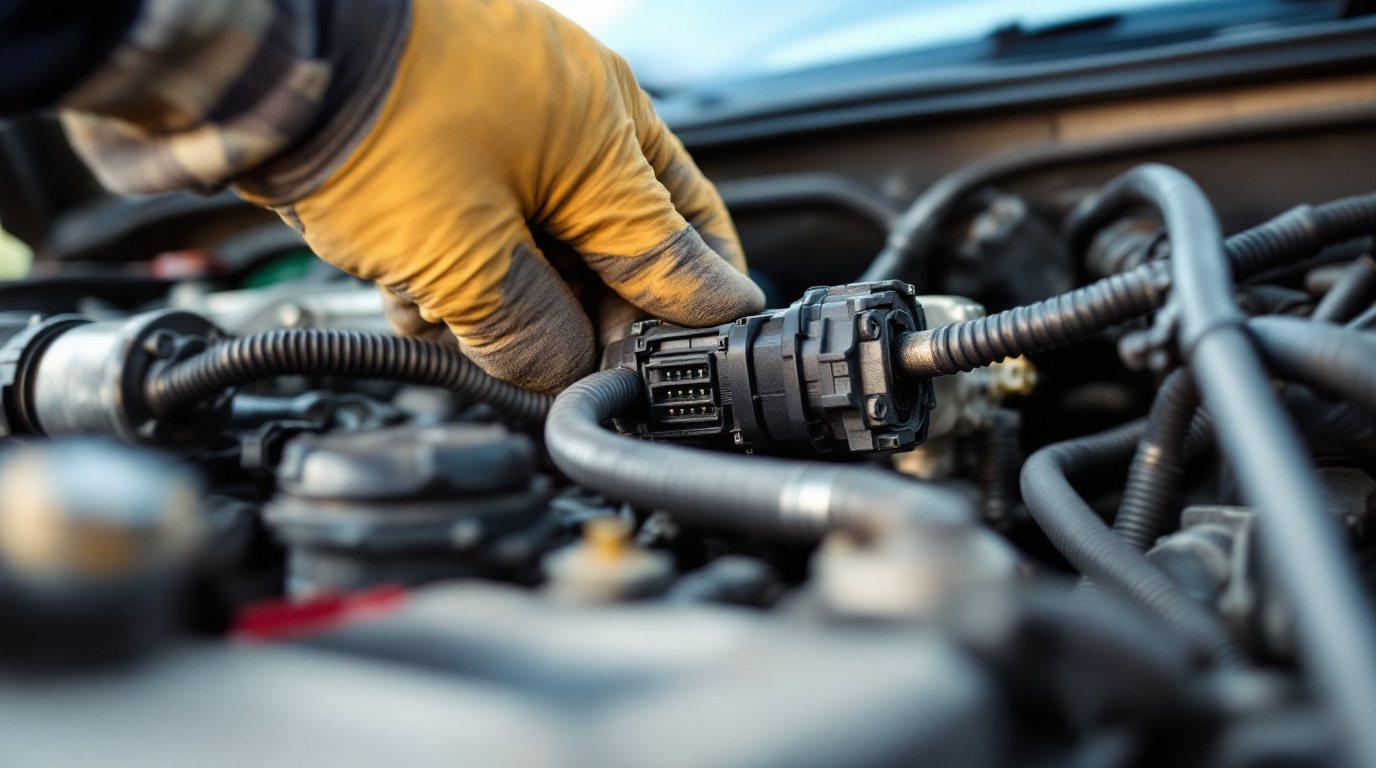
- The connector. Battery disconnected, unplug the EBCM and inspect the pins for corrosion and spread terminals. Road grime gets into this connector from below. Clean it and reseat it.
- Battery and charging. A weak battery and a module relay that is drawing current all night compound each other. Load-test the battery after it has been charged.
- Wheel-speed sensor live data. Graph all four speeds on a slow drive. A front channel that drops out or reads low at walking speed is the hub, not the module, and it is the cause of false ABS activation.
- The communication test. If the tool opens the EBCM, record the codes and the freeze-frame before you clear anything, then clear and drive to see what returns. If it will not open, prove power and ground first.
When should a mechanic be involved? When the pedal has changed, when the reservoir is low, when a code names a wheel channel you cannot trace, or when working under a truck on jack stands is not something you are equipped for. The lab repairs the module; the mechanic owns the truck around it.
Repair, refurbished, used or new: what each really costs
| Route | Starting price | What it covers | After it is installed |
|---|---|---|---|
| Our repair | From $325 | Your own KH325 module, relay stage and drivers repaired at component level and tested under load, with a 1-year warranty | Clearing codes; a few vehicles also want a bleed, initialization or calibration |
| Refurbished unit loaded with your data | From $950 | A refurbished KH325 of the same family with the data from your original transferred to it; your original is kept as the core | The same |
| Used unit | Varies | A salvage-yard module with no history; its relay stage has the same years on it as yours | Clear codes; the risk is a second failure soon after |
| New unit (part only) | Not published here | Our files hold no new-unit price for this family; GM's catalog lists remanufactured EBCM assemblies (19244899, 19244883, 19244894 and others) rather than new modules, priced by the dealer | Clear codes plus any procedure the dealer specifies |
The used-module point deserves a sentence. Every KH325 is now twenty to twenty-seven years old, and the relay stage that failed in yours is the stage that fails in all of them, so a used module is a module that has not failed yet. A repaired module has a new relay stage and a warranty.
Prices are starting prices. Return shipping is the one extra at checkout, and the tier is your choice: a standard return label runs $29.95 and 3–5 business days, a UPS 2nd Day Air label $54.95, a UPS Next Day Air label $94.95; the inbound label is already in the service, with $55 making it UPS 2nd Day Air. Bench time is about a week unless rush repair (+$100) is added, which makes it 2–3 business days.
Every repair and refurbished unit carries a 1-year warranty at no added cost; the warranty page has the terms. If the bench finds more than the service covers, you get the price first and nothing proceeds without your approval. Start at Kelsey-Hayes EBC325 repair, or request a quote with a photo of the label if you want the number checked first.
Removing and shipping the module
Only the EBCM ships. The BPMV, the pump motor and every brake line stay on the truck, no fluid is opened, and the truck does not need bleeding because of the removal.
- Order first so the RMA and the prepaid label are in your inbox.
- Chock the wheels, lift the truck safely and support it on stands. Most of this is done from underneath, on the driver's side.
- Pull the negative battery cable and let the system sit for a few minutes; the module is never unplugged with the key on.
- Clean the unit before you touch it. Years of road film sit on the BPMV, and grit that falls between the module and the valve block when you separate them is grit you will trap when you reassemble.
- Release the connector lock and pull the connector off the module. Photograph the pins.
- Remove the small screws holding the EBCM to the BPMV and lift the module straight off. The valve block face with the solenoid stems stays on the truck; cover it with a clean bag so nothing gets in.
- Do not open a brake line. There is no reason to on this family, and a line that is opened means a bleed before the truck moves.
- Photograph the label. GM numbers on these modules are eight digits, in the 12, 15, 19, 88 or 89 series for the assembly-style numbers or the 13354 series for module-only numbers; either kind identifies the module.
- Bag the module with its connector covered, cushion it with no less than two inches of padding, write the RMA on the carton and on a slip inside, and stick on the prepaid label.
The mail-in instructions page shows every step with photos. On brake safety: a truck without its EBCM has base brakes only, no ABS and no traction or stability assist, with the lamps lit; leave it parked where you can, and never drive it if a line has been opened.
What happens at the bench
A KH325 that arrives here is checked in against the RMA, its label photographed and its number recorded, then it is powered on the Kelsey-Hayes fixture, which reads the fault memory and drives the enable, valve and pump relay stages while we watch the current they switch. On this family the fault is usually visible as a relay that will not release or a driver that has shorted, sometimes with heat marks on the board around it.
The sealed housing is opened, the failed stage and the components it stressed are replaced, the board is cleaned and inspected, and the module is resealed and run through the same drive test again before it is packed. Your data stays on the module throughout. If a module is past saving, we stop and ask you how to proceed before anything else is done. How It Works carries the four-step outline.
After it is back in the car
Reinstall with the battery disconnected: wipe the BPMV face, set the module squarely, tighten the screws evenly, and push the connector on until it locks. Reconnect the battery, start the truck and clear the codes. The ABS lamp should go out once the truck has rolled a short distance and the module has seen all four wheel speeds.
No line was opened, so no bleed is forced by the repair, and this module keeps the data it had, so there is nothing to program. Check that the pump is quiet with the key off and that the lamp stays out over the next few drives. Some vehicles still need a brake bleed, initialization or calibration after install; where yours is one of them, the maker's procedure applies.
Part numbers for the GMT800 trucks and SUVs
GM part numbers for this module come in two styles. The rebuild lists carry assembly-style numbers in the 12, 15, 19, 88 and 89 series; the module-only lists carry 13354xxx numbers, plus 13567147 and two 19-series numbers. Our sources do not say which style a given truck's label shows, so read yours and type it into the part-number lookup.
| Part number | Note |
|---|---|
| 19244899 | GM catalog: Electronic Brake Control Module Assembly (remanufacture), 2000–2002 Tahoe and Suburban 1/2 ton |
| 19244883 | GM catalog: Electronic Brake Control Module Assembly (remanufacture), 2000–2002 Tahoe |
| 19244894 | GM catalog: Electronic Brake Control Module Assembly (remanufacture), 2001–2005 Suburban 3/4 ton (6.0L/8.1L); 2001–2007 Silverado 1500/2500 incl. Classic |
| 12475228 | KH325 module, 1999–2006 Chevrolet trucks and SUVs (Silverado, Tahoe, Suburban, Avalanche, S10, Blazer, Astro, SSR) |
| 12475557 | KH325 module, 1999–2006 GM trucks and SUVs |
| 12476224 | KH325 module, 1999–2006 GM trucks and SUVs |
| 12478043 | KH325 module, 1999–2006 GM trucks and SUVs |
| 15264970 | KH325 module, 1999–2006 GM trucks and SUVs |
| 19122252 | KH325 module, 1999–2006 GM trucks and SUVs |
| 88934715 | KH325 module, 1999–2006 GM trucks and SUVs |
| 88982286 | KH325 module, 1999–2006 GM trucks and SUVs |
| 13354715 | Module-only number, Kelsey-Hayes 325 / Series 30, 1999–2006 GM trucks and SUVs |
The compatible lists run to more than fifty numbers (12475558, 12475562, 12475564, 12476225, 12478044, 12478045, 19149022, 19153570, 19244881, 19244888, 19244890, 19244895, 19244907, 19299980, 19301633, 19301638, 88934716, 88934719, 88935640, 88935723, 88935843, 88935872, 88935873, 88982288, 88982297, 88982305, 88982309, 88982310, 88982938, 88982943, 89040386, 89040732 and the 13354716 through 13567147 module-only series among them), and the lookup holds all of them.
FAQ
How much does it cost to repair the ABS module on a Silverado or Tahoe?
The Kelsey-Hayes 325 repair is $325 to start, plus return shipping from $29.95. If the module is beyond repair, a refurbished unit with your data transferred starts at $950. These are starting prices; any work past the service is quoted and approved first.
Why does my ABS pump run all the time?
Because the pump-motor relay inside the EBCM has welded or its driver has shorted, so the motor is powered whether the module wants it or not. That same fault stores C0265. Pull the pump fuse to stop the drain, then send the module in; the repair replaces the relay stage.
Can the Kelsey-Hayes 325 be repaired rather than replaced?
Yes, and repair is the normal answer on this module: the parts that fail are relays and drivers on the board, replaced at component level and tested under load. The Kelsey-Hayes EBC325 page describes the unit. A module-only repair does not fix a burned pump motor or a hydraulic fault, which is why those are checked before we quote.
Does the module need programming when it goes back in?
No. A repaired module returns with the data it left with, and a refurbished unit has your data written into it here. Clear the codes after installation and drive; the lamp goes out when the module sees four wheel speeds.
How long will the truck be down?
About a week on the bench plus shipping both ways, or 2–3 business days on the bench with rush repair at +$100. UPS 2nd Day Air inbound (+$55) and outbound ($54.95) trims the shipping days.
Can I drive the truck without the module?
You can move it: the base brakes are untouched because no hydraulic part comes off, but there is no ABS, traction or stability assist and the lamps are on. If you must drive it, drive it as if it has no ABS, because it does not.
Is a used module a reasonable shortcut?
It is a gamble. Every module in this family is of the same age and fails at the same relay stage, so a used one is one that has not failed yet, with no history and usually no warranty. The repair comes with a new relay stage and a year of coverage.
What if the bench cannot repair it?
We stop and tell you first. You choose a refurbished module of the same family with your data transferred, from $950, paying the difference from what you already paid once we have confirmed it, or your module back with the repair price refunded minus shipping and a $150 bench evaluation fee.
What does the warranty cover and for how long?
Our work on the module, for 1 year from the ship date, on every repair and refurbished unit. It does not cover the hydraulic unit, sensors or wiring.
Sources
- GM catalog remanufactured EBCM assembly numbers and applications: gmpartsgiant.com Silverado, Tahoe and Suburban ABS control module listings (https://www.gmpartsgiant.com/oem-chevrolet-silverado-abs_control_module.html, https://www.gmpartsgiant.com/oem-chevrolet-tahoe-abs_control_module.html, https://www.gmpartsgiant.com/oem-chevrolet-suburban-abs_control_module.html).
- Code definitions: engine-codes.com, C0201 Chevrolet (https://www.engine-codes.com/c0201_chevrolet.html) and C0265 Chevrolet (https://www.engine-codes.com/c0265_chevrolet.html); autocodes.com, C0121 (https://www.autocodes.com/c0121.html).
- Unit family, typical failure, C0267 / C0268 and the compatible part-number lists: independent module repair catalogs (not linked).