Ford Explorer and Escape ABS Module: U3000-49, B1342 and Repair
ABS Module Lab Team · · 17 min read
Which Continental ABS unit a 2002–2019 Explorer or 2008–2019 Escape carries, what U3000:49, B1342 and C1095 mean, and what repair or replacement costs.
On a Ford Explorer or Escape, B1342, U3000:49 (printed as U3000-49 by many scan tools) and an ABS lamp that arrives with a dead speedometer are the marks of an internal fault in the Continental ABS unit: the MK61 on 2004–2010 Explorers and 2008–2012 Escapes, the MK100 on 2011–2019 Explorers and 2013–2019 Escapes. Repairing your own unit costs from $499 for either generation and a refurbished unit written with your vehicle's data costs from $950, with return shipping added to both. Before ordering, read the codes from the ABS module itself, rule out the battery, fuses and grounds, and photograph the label so the unit can be confirmed.
Which Explorer and Escape models have this ABS unit
Four vehicle lines cover these two Fords, divided where the unit changed, and the Mercury and Mazda twins sit on the same pages.
| Line | Models on the line | Unit on file | Unit family | Vehicle page |
|---|---|---|---|---|
| 2002–2010 Explorer | Explorer, Explorer Sport Trac, Mercury Mountaineer | Continental Teves (ATE) MK61 on 2004–2010 models | ATE / Continental MK60 / MK61 | 2002–2010 Explorer |
| 2011–2019 Explorer | Explorer | Continental ATE MK100 | Continental MK100 | 2011–2019 Explorer |
| 2008–2012 Escape | Escape, Escape Hybrid, Mercury Mariner, Mazda Tribute | Continental Teves (ATE) MK61 | ATE / Continental MK60 / MK61 | 2008–2012 Escape |
| 2013–2019 Escape | Escape | Continental ATE MK100 | Continental MK100 | 2013–2019 Escape |
Two generations, one price. The MK61 is repaired here as part of the ATE / Continental MK60 / MK61 family and the MK100 as the Continental MK100 family, both from $499. They are Continental units of different generations, and the guide to the Continental units from MK20 to MK100 explains how they differ; for this repair the main thing they share is a control unit mounted on the valve block.
Gaps in the record. Nothing on file names the unit on a 2002 or 2003 Explorer, so for those years the label decides. The Escape Hybrid sits on the 2008–2012 line, and the catalog lists BL8Z-2C219-A for the 2011–2012 Escape and the 2011 Mariner with the hybrid included, but a hybrid owner should send the label through the quote form before ordering so the unit is confirmed.
Fords that are not on this list. A Ford outside these four lines, an Edge for example, may or may not carry one of these units, and nothing here says it does. Go by its label in the part-number lookup, or send a photo through the quote form, before ordering. Ford's full-size pickups and the Expedition have their own guide.
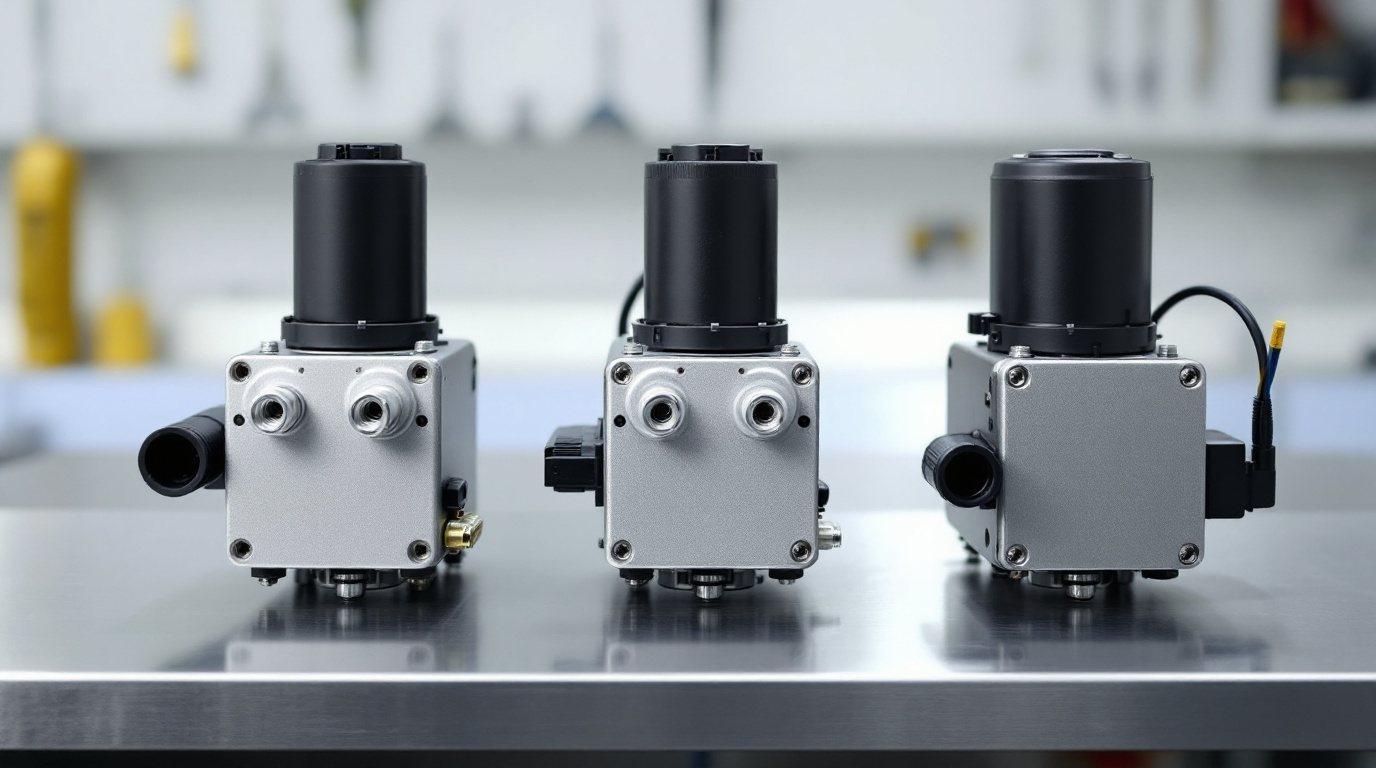
What ships. Under the hood, the ABS unit is the metal block fed by the brake lines from the master cylinder, with the pump motor on one face and the control unit and its harness plug on another. On both generations the control unit is fastened to that block, and where it can be separated the electronics travel alone while the block, the lines and the fluid stay in the vehicle.
Symptoms of a failing ABS module on the Explorer and Escape
Lamps and a dead speedometer. For Explorers from 2006 to 2014 and Escapes from 2008 to 2016, the failure on file is an internal defect in the ABS unit that stores B1342 and C0020, often together with a loss of communication and a speedometer that stops working. The Escape description adds the ABS and ESP lamps lit at the same time.
A wheel that does not brake. The same Escape failure is described with no braking effort at one or more wheels. That is a braking fault, not just a lamp: if the vehicle pulls, stops long or feels different under the pedal, have the brakes inspected before it is driven again.
A spongy pedal that sinks. On the 2009–2010 Explorer, a spongy pedal that goes to the floor is listed beside B1342, U3000:49, no communication and C1095. A sinking pedal can also come from a leak, air in the system or a worn master cylinder, so the hydraulics are checked first and the vehicle stays parked until they have been.
Faults that come and go. Lamps that appear on a hot afternoon or over rough pavement and clear after a restart fit a failing joint inside the unit or a loose connection near it. Note when they appear; the bench can use it.
With a normal pedal and only the lamps on, the base brakes still work. What is missing is anti-lock in a hard stop and the stability control the ESP lamp stands for.
The fault codes you will see
About the colon. Ford writes these codes with a colon and a two-character suffix, U3000:49 and U3000:41, while many scan tools print the same codes as U3000-49 and U3000-41, and some show the suffix in a separate failure-type column. They are the same codes in a different display. The suffix narrows down the kind of fault the module logged, and both suffixes carry the same meaning on file.
| Code | Meaning on file | Lines on file | What it points to |
|---|---|---|---|
| U3000:49 (U3000-49) | Control module fault | 2002–2010 and 2011–2019 Explorer, 2008–2012 Escape | The ABS module's own electronics |
| U3000:41 (U3000-41) | Control module fault | The same three lines | The same module, with a different failure type |
| B1342 | ECU internal fault; on the 2013–2019 Escape, ABS control module malfunction | All four lines | The ABS control unit itself |
| C1095 | ABS hydraulic pump motor circuit failure (Explorer); ABS hydraulic pump motor failure (2008–2012 Escape) | 2002–2010 Explorer, 2008–2012 Escape | The pump motor, its feed, or the module's motor driver |
| C0020 | Motor fault (Explorer); ABS pump motor control (2008–2012 Escape) | 2002–2010 Explorer, 2008–2012 Escape, and the failure described for Explorers to 2014 and Escapes to 2016 | The pump-motor control path, inside the unit or at the motor |
B1342 starts with a B but is stored by the ABS module here. Ford uses the same code for an internal fault in other modules, so check which module reported it before you blame the brakes.
When the tool gets no answer. Loss of communication with the ABS module is part of the failure on file for both generations. Before deciding the unit is dead, prove its power, ground and network wiring at the connector, since a blown fuse or a corroded ground leaves the module just as silent; the guide to a module that will not communicate lists the tests in order. A unit that stays silent with all three proven good is the part to send.
Why these modules fail
Inside the unit. The failure on file is internal: the unit develops defects that store B1342 and C0020, and the lost communication follows from a control unit that has stopped working properly. The control unit sits on the valve block and drives the valves and the pump motor, and the parts that age with heat and vibration are its solder joints, the power stage that switches those loads, and its internal supply.
Why the speedometer quits. The ABS module reads the four wheel-speed sensors, and the speed the cluster shows depends on the data it provides. When the module fails, the speedometer can drop to zero with it, which is why that symptom points at the ABS unit rather than at the cluster.
Pump codes. C1095 and C0020 name the pump motor circuit. The motor is a separate part bolted to the hydraulic block, and a seized or worn motor can set the same codes as a failed driver inside the control unit, so the bench tests the module's motor driver under load; a driver that passes points back at the motor.
Not the module. A wheel-speed sensor, the ring or encoder it reads, the harness to each wheel, a leaking line or caliper, air in the system and a tired master cylinder all sit outside the control unit. Sensor faults name a wheel and show as one wrong speed in live data; hydraulic faults show in the pedal. A repaired control unit fixes neither.
Check these before you condemn the module
| Check | How | What a bad result means |
|---|---|---|
| Battery and charging | Load-test the battery; read charging voltage with the lights and blower on | Low or unstable voltage can set ABS faults that look internal |
| ABS fuses | Test the module and pump fuses on both sides with a meter or test light | An open fuse can explain a silent module or a pump code |
| Grounds | Clean and tighten them, then measure the voltage drop under load | A poor ground can cut power and communication |
| Module connector | Battery off, unplug and look for green corrosion, water and pushed-back pins | Corrosion can give faults that come and go |
| Which module set B1342 | Read the module name beside the code | B1342 stored elsewhere is not an ABS fault |
| Wheel-speed live data | Roll slowly and watch all four speeds | One wheel that lags or drops out is a sensor, ring or wiring fault |
| Communication | Try to open the ABS module, and if it stays silent, meter its connector for power and ground | Good power, ground and network wiring with no reply means the module |
| Pedal and hydraulics | Pedal feel, fluid level, leaks at the wheels and lines | A sinking pedal or a wheel that does not brake is a shop job first |
A mechanic belongs in the picture when the pedal has changed, a wheel is not braking, fluid is going somewhere, or the work is beyond your comfort. The lab repairs the control unit, and anything else wrong with the Explorer or Escape is for a shop to find.
Repair, refurbished, used or new: what each really costs
| Service | Price | What you receive | Before it works in the vehicle |
|---|---|---|---|
| MK61 repair (2004–2010 Explorer, 2008–2012 Escape and twins) | From $499 | Your own control unit, repaired at component level and tested, configuration intact | Codes cleared and a drive |
| MK100 repair (2011–2019 Explorer, 2013–2019 Escape) | From $499 | The same service on the MK100 unit | Codes cleared and a drive |
| Refurbished unit with your data | From $950 | A refurbished unit of the same family carrying the VIN, coding and configuration from your original, which becomes our core with no separate core charge | Codes cleared and a drive |
| Used unit | Varies | A unit configured for another vehicle, with no history | Configuration by a shop or dealer, and a risk of a mismatched number |
| New Ford unit | No price on file | A new part, if the number is still sold | Ask the installer about programming and its cost before buying |
No new-part price is on file for these four lines, so price the new route with a Ford parts counter quote for the number on your label.
Our prices are starting prices for the service itself; anything else the bench finds is costed and waits for your go-ahead. Return shipping is added at checkout, and the speed is yours to pick: the standard label is $29.95 and takes 3–5 business days, UPS 2nd Day Air is $54.95, and UPS Next Day Air is $94.95. We email the inbound label once you have paid, USPS ground unless you add $55 for UPS 2nd Day Air. On the bench, plan for about a week, or 2–3 business days if you add rush repair at +$100. The 1-year warranty, counted from the ship date, comes with every repair and refurbished unit at no charge, and no other warranty is offered; the warranty page says what it covers.
When a unit cannot be saved, the bench stops and asks. You can switch to a refurbished unit with your data, paying the balance between its price and what you paid once we have confirmed it with you, or have your own unit shipped back and the repair price refunded minus shipping costs and a $150 bench evaluation fee. A refurbished unit does not leave before your original arrives, since it is written with data read out of the original.
Order the MK61 repair for a 2004–2010 Explorer or 2008–2012 Escape, or the MK100 repair for a 2011–2019 Explorer or 2013–2019 Escape. The MK100 family page and the MK60 / MK61 family page list the vehicles on file in each family, and a 2002–2003 Explorer or any doubtful label goes through request a quote with a photo and your codes.
Removing and shipping the module
On these Continental units the control unit is fastened to the valve block, and on many of them it comes off by itself, which keeps the brake lines closed. Look before you loosen anything, and send a photo if the screws or the joint are not obvious.
- Order first. The RMA number and then the prepaid label arrive by email.
- Cut the power. Key out, negative battery terminal disconnected, and a few minutes' wait.
- Photograph the unit and its label in place. The number printed on the label is the one the bench matches at check-in.
- Free the harness plug by opening its lock all the way, then pull it straight off.
- Remove the screws holding the control unit to the valve block and draw it off squarely, without levering against the block. The brake lines stay connected.
- Cover the exposed face of the valve block with a clean bag taped in place so no dirt or water gets in.
- If the control unit will not separate, stop. Taking out the whole unit means opening the lines, capping each port and bleeding the system afterward, and the vehicle cannot be driven until that is done. Ask through the quote form first.
- Pack it in a clean or anti-static bag with the connector protected, two inches of padding on every side in a sturdy box, the RMA on the box and on a note inside, and the prepaid label on top.
The mail-in instructions show the packing. With the control unit out, the vehicle has no ABS or stability control and its speedometer may not work. The base brakes remain while the lines are closed, but keep it parked if you can and never drive it with a line open.
What happens at the bench
Check-in starts with the paperwork: the unit is matched to your RMA, and its label is photographed and read. Power then goes on at the bench, the unit's stored data and fault memory are read out, and its motor and valve driver stages are worked under load. The fault is fixed at component level and the unit is retested in full before it is packed and sent at your chosen speed, its configuration unchanged. A unit that cannot be saved stops there until you decide, and how it works sets out each stage between your order and the return label.
After it is back in the car
Reinstalling takes four moves: seat the control unit squarely on the valve block, tighten its screws evenly in a cross pattern, lock the harness plug, and reconnect the battery. Clear the codes in the ABS module and in any module that logged a lost-communication fault, then drive. Once the unit has seen all four wheels turning, the lamps should go out and the speedometer should read again.
If the lines stayed closed, the job itself does not force a bleed. The repaired unit keeps its own configuration and a refurbished one arrives with yours, but some vehicles still need a brake bleed, initialization or calibration after install. Ford's procedure for your model, run through a scan tool, tells you which ones apply. A new unit from a parts counter is the case to plan for: ask the installer about programming and its cost before you buy.
Part numbers for the Explorer and Escape
Ford's catalog sells these units under several base numbers: 2C219 is a "Control Module", 2C215 a "Modulator Valve", 2C405 a "Control Unit Assembly" or "ABS Control Unit", and on the 2008–2009 Escape 2C346 an "Abs Control Module". Every 2013–2019 Escape number on file is a 2C405 part. Service numbers carry a Z in the fourth place (9L2Z-2C219-D); the number printed on a unit can be an engineering number instead (9L24-2C219-CC). Type whichever your label shows into the part-number lookup; dashes and spaces do not matter.
| Part number | Line | Note on file |
|---|---|---|
| 7L2Z-2C215-A | 2002–2010 Explorer | "ABS Anti-Lock Brake Modulator Valve", 2006–2010 Explorer |
| 9L2Z-2C219-D | 2002–2010 Explorer | "Control Module", 2009–2010 Explorer |
| AL2Z-2C219-C | 2002–2010 Explorer | "Control Module", 2010 Explorer |
| CB5Z-2C219-C | 2011–2019 Explorer | "Control Module", 2011–2012 Explorer (2.0L / 3.5L) |
| CB5Z-2C405-C | 2011–2019 Explorer | "Control Unit Assembly", 2011–2012 Explorer |
| DB5Z-2C219-B | 2011–2019 Explorer | "Control Module", 2013–2014 Explorer |
| FB5Z-2C219-A | 2011–2019 Explorer | "Control Module", 2016–2019 Explorer (2.3L / 3.5L / 3.7L) |
| 8L8Z-2C346-D | 2008–2012 Escape | "Abs Control Module", 2008 Escape |
| AM6Z-2C219-B | 2008–2012 Escape | "Control Module", 2009–2010 Escape |
| BL8Z-2C219-A | 2008–2012 Escape | "Anti-Lock Brakes-Control Module", 2011–2012 Escape and 2011 Mariner, hybrid included; replaces BL8Z-2C219-B |
| CV6Z-2C405-A | 2013–2019 Escape | "Control Unit Assembly", 2013–2015 Escape |
| GV6Z-2C405-G | 2013–2019 Escape | "ABS Control Unit", 2017–2019 Escape |
Engineering numbers on file without a catalog year include AL24-2C219-CA on the 2002–2010 Explorer line, BB53-2C219-AD and EB53-2C219-AA on the 2011–2019 Explorer, 8L84-2C346-EA and BL84-2C219-AB on the 2008–2012 Escape, and CV612C405AH, on file without dashes, on the 2013–2019 Escape.
FAQ
What does U3000-49 mean on a Ford Explorer or Escape?
U3000-49 is the scan-tool form of Ford's U3000:49, listed on file as a control module fault in the ABS unit of 2002–2019 Explorers and 2008–2012 Escapes. It points at the module's own electronics, and on 2009–2010 Explorers it is listed beside B1342 and a loss of communication. Once power and ground are proven at the connector, it is a bench repair from $499.
What does B1342 mean on a Ford ABS module?
B1342 means an internal fault in the electronic control unit, and on the 2013–2019 Escape it is listed as ABS control module malfunction. Ford uses B1342 in other modules too, so confirm the ABS module stored it. Stored there, on an Explorer or Escape it points at the control unit rather than a sensor.
How much does a Ford Explorer ABS module repair cost?
A Ford Explorer ABS module repair starts at $499 for both the MK61 unit on 2004–2010 Explorers and the MK100 unit on 2011–2019 models, plus return shipping from $29.95. A refurbished unit carrying the Explorer's data starts at $950. Anything else the bench finds is priced and approved by you before the work is done.
Can the MK100 ABS module on a 2013–2019 Escape be repaired?
The MK100 control unit on a 2013–2019 Escape is repaired here from $499, and the faults on file for it, internal defects storing B1342 and C0020, sit in the electronics that a component-level repair addresses; a worn pump motor, which stays on the vehicle, is a separate part. If the bench finds the Escape's unit past repair, you are told before anything else happens and can choose a refurbished unit or your module back.
Why did my Escape's speedometer stop working with the ABS light on?
On the 2008–2016 Escape the ABS failure on file comes with a dead speedometer, because the speed reading depends on data from the ABS module. When the module stops working, the speedometer goes with it, and both normally return once a repaired unit is installed and the codes are cleared.
Can I drive my Explorer with the ABS and ESP lights on?
An Explorer showing the ABS and ESP lamps with a normal pedal can still be stopped with its base brakes; it has lost anti-lock and stability control, so drive gently and get the codes read soon. If the pedal sinks or feels spongy, or a wheel is not braking, park the Explorer until the brakes have been inspected.
Does a repaired Ford ABS module need programming?
A repaired Explorer or Escape control unit goes back with the configuration it left with, and a refurbished unit from us is written with your vehicle's data before it ships. Once either is installed, clear the codes and run any setup procedure Ford's scan-tool routine lists for your model.
Does a Ford Edge use the same ABS module as the Explorer?
Nothing on file ties the Edge to the Explorer's or the Escape's ABS units, so do not assume it. Read the number on the Edge's label and type it into the part-number lookup, or send a photo through the quote form, and the unit and price are confirmed before you order.
What if my Explorer or Escape ABS module cannot be repaired?
An Explorer or Escape unit that cannot be repaired puts the bench work on hold while you choose. A refurbished unit with your data costs the difference between its price and what you already paid, or your Explorer or Escape unit comes back with the repair price refunded minus shipping and a $150 bench evaluation fee. A refurbished unit comes with the included 1-year warranty, counted from the day it ships.