Ram 1500 ABS Module Failure: Symptoms, Codes and Repair (1998–2018)
ABS Module Lab Team · · updated · 17 min read
What fails on the 1998–2018 Ram 1500 ABS module, the codes it sets (C0265, C2200-49, U0121), what a repair costs from $325 and how to ship it to the bench.
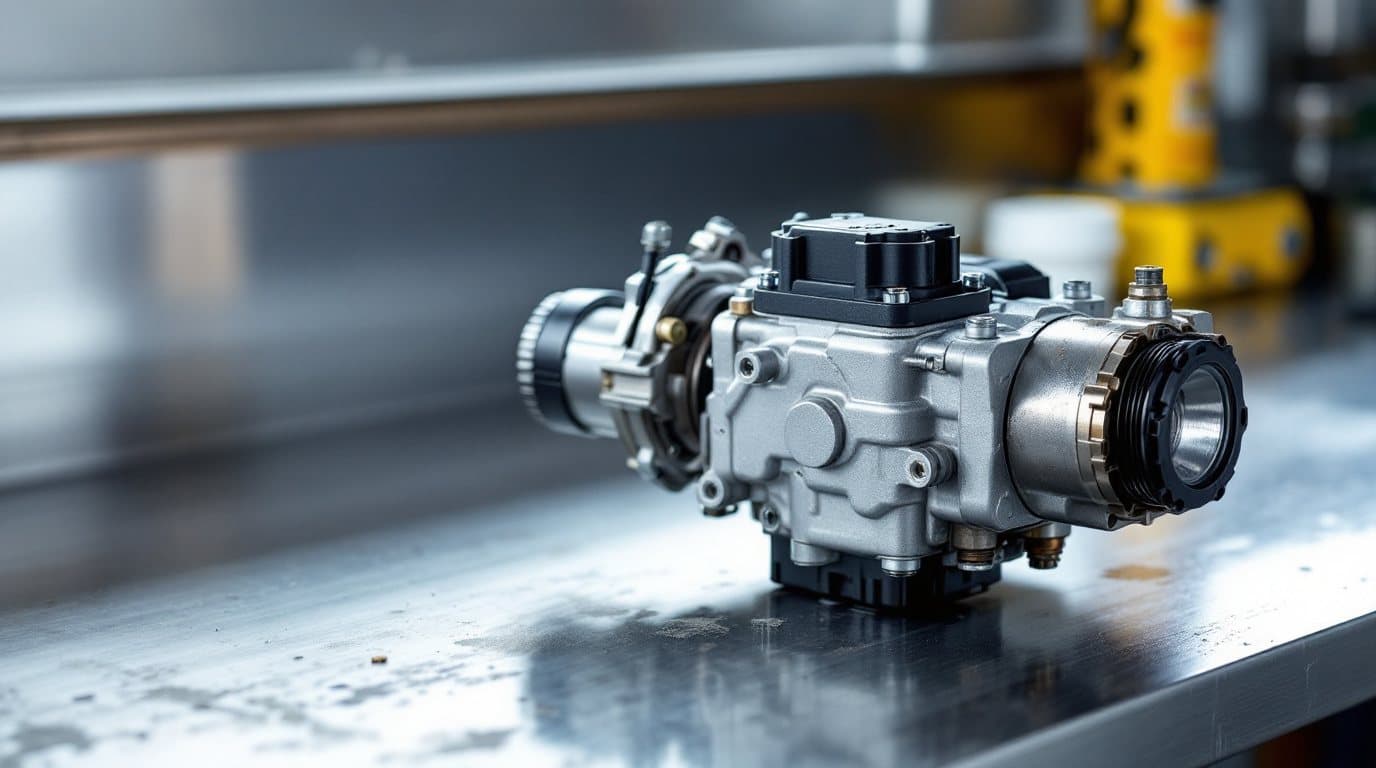
The 1998–2018 Ram 1500 went through two ABS control module families, and both fail in ways that look alarming but are usually repairable at the board level: the Kelsey-Hayes 325 module on 1998–2005 trucks is known for a pump that will not shut off and the code C0265, while the TRW units on 2006–2018 trucks lose communication, set C2200-49 or C2200, and cut in and out. Repair of your own module starts at $325 for the Kelsey-Hayes unit and $499 for the TRW unit, plus return shipping, and it comes back with your truck's data still on it. Before you order anything, read the codes with a scan tool that talks to the ABS module, photograph the label on the module, and rule out the cheap causes listed below.
Which Ram 1500 trucks have this ABS unit
Three series of the half-ton Ram share this guide because the ABS hardware changed in the middle of one of them, not at a body change.
1998–2005 (BR/BE, then the 2002–2005 DR). These trucks carry the Kelsey-Hayes 325 electronic brake control module, a design GM and Ford used in the same years. The module is a separate electronic box bolted to the brake pressure modulator valve; it comes off the valve body on its own and is the only part that ships to us. The lab prices it as the Kelsey-Hayes EBC325 family, the lowest-priced repair we publish. The 1998–2005 line, which also covers the 2500 and 3500 of those years, has its own page at Ram 1500/2500/3500 (BR/BE, DR/DH) 1998–2005, and the DR itself is at Dodge Ram 1500 (DR) 2002–2008.
2006–2008 (late DR). Dodge moved to TRW. Our files document two TRW units in these years: the EBC-345 on 2006–2009 four-wheel-drive Ram 1500/2500/3500 and the EBC-440 on 2006–2012 Ram 1500. The two lists overlap and even share part numbers (55366224AE and 55366224AI appear on both), so which unit a given 2006–2008 truck has is settled by the label, not by the model year. Both belong to the TRW EBC 345 / 440 / 450 family here, and both are priced the same.
2009–2018 (DS, continued as the Ram 1500 Classic). The DS is the longest-running of the three series. The TRW EBC-440 is documented on 2009–2012 trucks; for 2013–2018 our files do not name the supplier, but the Mopar part numbers run in an unbroken sequence through 2018 and the same four codes are reported on them, so we treat the whole DS run as one job and confirm the unit from the label when it arrives. From the 2012 model year, electronic stability control is required on trucks of this weight by federal standard FMVSS No. 126, which is why later DS trucks show a traction and stability lamp alongside the ABS lamp. The vehicle page is Ram 1500 (DS) 2009–2018.
The 2019-on DT uses a Continental unit and is a different job (Ram 1500 (DT) 2019–2020); the 2003–2009 heavy-duty trucks made the same Kelsey-Hayes-to-TRW change (Ram 2500/3500 2003–2009).
On every one of these trucks the control module sits on the hydraulic unit. Follow the brake lines from the master cylinder to an aluminum block with a round pump motor on it; the control module is the plastic box with the large connector bolted to that block. On both families the module unbolts from the valve block, so the hydraulic side, and the brake fluid, stay on the truck.
Symptoms of a failing ABS module on the Ram 1500
What you notice depends on which family you have.
On the 1998–2005 Kelsey-Hayes trucks, the classic complaint is the ABS pump running when it should not: a hum or whir from the hydraulic unit that continues after the truck is stopped and sometimes after the key is off. Owners often find it because the battery is dead in the morning, or because the pump motor finally overheats. The amber ABS lamp is on, and older scan tools show two-digit flash codes rather than the familiar C-codes: 65 and 66 for the internal main relay, 67 and 68 for the pump motor.
On the 2006–2018 TRW trucks the module more often goes quiet. The ABS lamp comes on, the traction and stability lamps join it on trucks that have them, and the scan tool either reports an internal failure (C2200-49 on the EBC-440, C2200 on later trucks) or cannot reach the module at all. Intermittent behavior is common: the lamps go out for a week, then come back on the first cold morning or after a hard bump. The TRW units can also stick the pump on.
A few things are true of either family. The base brakes keep working: an ABS module failure removes anti-lock, traction and stability assistance, not the hydraulic braking you do with your foot. On trucks with stability control, cruise control may refuse to engage while the fault is active. A fault that comes and goes with temperature or vibration points toward a cracked solder joint or a tired component on the board rather than a sensor, which is why "it fixed itself" is rarely true for long.
The fault codes you will see
You need a tool that can open a session with the ABS controller; an engine-only code reader shows nothing from it. Our files tie these codes to the Ram 1500 and its two module families.
| Code | Meaning | What it points to |
|---|---|---|
| C0265 | Motor relay circuit low when on (the EBCM's pump relay) | The relay stage inside the Kelsey-Hayes module; the usual companion of a pump that runs constantly |
| 65 / 66 | Internal main relay (flash codes, 1998–2005) | The same relay stage, reported by an older tool |
| 67 / 68 | Pump motor fault (flash codes, 1998–2005) | The pump driver in the module, or the motor it drives |
| C2200-49 | Internal failure code (TRW EBC-440, 2006–2012) | The module's own self-test has failed |
| C2200 | Anti-lock brake module internal fault (2013-on DS) | The same internal fault on the later TRW unit |
| U0121 | Lost communication with the ABS module | Set by other modules when the ABS unit drops off the network |
| C2116 | Pump motor fault / pump supply low voltage | The pump motor feed stage, or a genuine supply problem |
Some tools print the Kelsey-Hayes relay fault as C25 or "code 25"; it is the same C0265 condition under a different label.
When the scan tool cannot communicate with the ABS module at all, treat that as its own case. A module that does not answer may be dead inside, but it may also be unpowered: a blown fuse, a corroded ground, a connector that has backed out, or a battery so low the module will not boot. Other modules on the truck will log U0121 against it. Confirm power and ground at the module connector before you blame the board. If both are present and the module still does not answer, that is a module problem, and on the TRW units it is a normal bench repair.
Why these modules fail
The Kelsey-Hayes 325 fails at its relay stage. The module carries the main relay and the pump-motor relay internally rather than in the fuse box, and when the pump relay contacts weld or the driver that controls them fails, the pump motor is powered whether the module wants it or not. That is the constantly running pump, the overnight dead battery and C0265 in one fault. The repair is to replace the relay stage and the driver circuitry and retest the module under load; a pump motor that has already overheated from running for days is a separate hydraulic-side part.
The TRW EBC-440 and EBC-345 fail differently. The faults we see, and the ones our files list, are internal failure (C2200-49), loss of communication, intermittent operation and pump codes. These are board problems: the processor loses its supply, a solder joint at the connector or the power stage cracks with heat cycling, or a component in the pump driver drifts out of specification.
What is not the module: a wheel-speed sensor reading erratically or dropping out at low speed, a cracked or rusted tone ring on an axle shaft or hub, a chafed sensor harness, a seized or burned pump motor, and hydraulic faults inside the valve block. Those set different codes, most of them naming a wheel position or the hydraulic circuit, and a repaired module will not cure them.
Check these before you condemn the module
Some of the symptoms above have cheap causes, and a module shipped for a problem it does not have is a week of downtime for nothing.
- Fuses. Check the ABS fuses in the underhood power distribution center with a test light, not by eye. An open pump fuse explains a pump code; an open module fuse explains silence on the network.
- Battery and charging. C2116 and other supply-voltage faults set when voltage sags. Load-test the battery and read charging voltage at idle with the headlights on before chasing the module.
- Grounds. The module and pump motor grounds sit low on the truck and corrode. Clean and tighten them, then measure the drop between the module's ground pin and battery negative with the pump running.
- The connector. Unplug the module (battery disconnected) and look at the pins for green corrosion, bent terminals and the water line that marks a flooded connector.
- Wheel-speed sensor live data. Drive slowly with the scan tool connected and watch all four wheel speeds rise together. One channel that reads zero, jumps or drops out at low speed is a sensor, tone ring or harness problem, not a module problem.
- The communication test. If the tool reaches the module, record every stored code and its freeze-frame before clearing anything; if it does not, verify power and ground at the connector.
- A stuck-on pump. If the pump is running with the key off, pull the pump fuse so the motor and battery survive while you decide what to do. The base brakes still work without it.
A shop belongs in the picture when the pedal feels different, when fluid is going somewhere, when a code names a hydraulic circuit, or when brake work is outside what you are comfortable doing. We repair the module; sorting out the truck around it is the mechanic's job.
Repair, refurbished, used or new: what each really costs
| Choice | Starting price | What it includes | After installation |
|---|---|---|---|
| Our repair, Kelsey-Hayes 325 (1998–2005) | From $325 | Your own module, repaired at component level, your data untouched, 1-year warranty | Clear codes; some trucks need a bleed, initialization or calibration |
| Our repair, TRW EBC (2006–2018) | From $499 | The same service on the TRW unit | The same |
| Refurbished unit with your data | From $950 | A refurbished module of the same family carrying the VIN, coding and configuration read out of yours; your original is kept as the core, with no separate core charge | The same |
| Used unit | Varies | A module from a salvage truck with no history, coded to another VIN | Coding or configuration at a shop; mismatch risk; usually no warranty |
| New unit (part only) | $339.18 catalog price for 5134733AB, the 2005 Ram 1500 3.7L/4.7L module (list price $472, checked October 2026) | A blank module, if the number is still available | Configuration to the truck plus any bleed or initialization |
For a 2004–2005 truck whose number is still stocked, a new Mopar module costs about what our repair does, and the choice is between a new unit that needs configuring and your own unit back with its data intact. For 2006–2018 trucks our files hold no current new-module price, and several of the catalog numbers have been superseded more than once.
Every figure in the table is a starting price. Return shipping is chosen at checkout and billed on top: the standard label ($29.95) takes 3–5 business days, and the two faster tiers are UPS 2nd Day Air ($54.95) and UPS Next Day Air ($94.95); the prepaid label that brings the module to us is included, and $55 turns it into UPS 2nd Day Air. Bench time runs about a week, or 2–3 business days when rush repair (+$100) is on the order.
The 1-year warranty that comes with every repair and refurbished unit starts on the ship date, and the warranty page sets out the coverage. Should the bench find work the service does not cover, the cost reaches you first and nothing proceeds until you approve it. Start at Kelsey-Hayes EBC325 repair or TRW EBC repair, or request a quote with a label photo if you are not sure which you have.
Removing and shipping the module
On both families only the electronic control module ships. The valve block, pump and brake lines stay on the truck, so no fluid is opened.
- Order first so your RMA number and the prepaid label are in your inbox before the module comes out.
- Disconnect the negative battery cable, then give it a few minutes before you touch the module; never unplug an ABS module with the key on.
- Find the hydraulic unit by following the brake lines from the master cylinder. The module is the plastic box with the large multi-pin connector on the side of the aluminum block.
- Release the connector lock and pull the connector straight off. Photograph the pins if they are corroded; that photo helps the bench.
- Back out the module's mounting screws and lift it clear of the valve block. If it resists, stop and send us a photo through the quote form rather than prying.
- Leave the valve block on the truck and do not loosen a brake line. If a line is opened the truck cannot be driven until the system is bled.
- Photograph the label. It carries the Mopar number, sometimes with a P prefix (P52010032AF is the same part as 52010032AF), and that number goes on your order.
- Bag the module, cover the connector so the pins cannot bend, pack it with at least two inches of padding on every side, write the RMA on the box and on a note inside, and attach the prepaid label.
Photos of each step are on the mail-in instructions page. One safety note on brakes: a truck with its module out has no ABS, traction control or stability control and will light the warning lamps; the base brakes still work, but drive it only if you must, and never with a brake line opened.
What happens at the bench
Your module is logged in under its RMA, its label is photographed, and it goes onto our test fixture. There we read its stored data and fault memory and run the pump-motor and valve driver stages under a real load; on the Kelsey-Hayes unit that usually means the relay stage, on the TRW units the power supply, the processor's connections and the communication driver. We repair what we find at component level, run the module through the same sequence again, and ship it back carrying the VIN and configuration it arrived with. If the fault is beyond repair we stop and ask before doing anything that changes your price; How It Works outlines the whole sequence.
After it is back in the car
With the battery still disconnected, set the module flat on the valve block, tighten its screws evenly, and push the connector on until the lock clicks. Reconnect the battery, start the truck and clear the stored codes with your scan tool, including U0121 in the other modules. Drive it: the ABS lamp should go out within the first few hundred feet once the module sees four wheel speeds, and the traction and stability lamps with it.
Because the brake lines were never opened, a bleed is not forced by the removal. Trucks with stability control may ask for a steering-angle or brake-pressure sensor initialization after power has been off the module; the scan tool will say so. Some vehicles still need a brake bleed, initialization or calibration after install, and if yours is one of them the procedure is the vehicle maker's.
Part numbers for the Ram 1500
The number on your label picks the family and the service. Mopar uses "Module" numbers for the electronics alone and "Control Unit" numbers for the module with its hydraulic block, and a label can show either. Type what you read into the part-number lookup to get the family, the fitment list and the price.
| Part number | Note |
|---|---|
| 5083096AC | Mopar control module, 2002–2003 Ram 1500 3.7L/4.7L/5.9L; replaces 5083096AB |
| 52010032AF | Mopar control module, 2002–2003 Ram 1500 3.7L/4.7L/5.9L; replaces 52010032AD and 52010032AE; labels may read P52010032AF |
| 5134733AA | Mopar module, 2004 Ram 1500 3.7L/4.7L |
| 5134733AB | Mopar control module, 2005 Ram 1500 3.7L/4.7L |
| 5127593AB | Mopar control module, 2004–2005 Ram 1500 5.7L |
| 5175413AC | Mopar module, 2006 Ram 1500 3.7L/4.7L/5.7L; replaced by 5175413AD |
| 55366355AF | Mopar control unit, 2007 Ram 1500 |
| 68031387AD | Mopar module, 2008 Ram 1500; replaces 68031387AC |
| 68068752AA | Mopar module, 2010 Ram 1500 3.7L–5.7L; replaced by 68068752AB |
| 68196035AB | Mopar module, 2013 Ram 1500 4WD 3.6L/4.7L/5.7L |
| 68228991AB | Mopar module, 2014 Ram 1500 3.0L diesel/3.6L/5.7L |
| 68295368AB | Mopar module, 2017–2019 Ram 1500 |
Two cautions from our files. The 55366224 series (55366224AE, 55366224AI, 55366224AR) appears on TRW lists for the 2006–2012 Ram 1500, but in the Mopar catalog that series belongs to the Ram 2500 (55366224AR to the 2010–2011 trucks); match the label, not the model. And no 2009 DS module number surfaced in the catalog pages we read, so a 2009 owner should send the label number through the lookup or the quote form.
FAQ
What does a Ram 1500 ABS module repair cost?
Your own module comes back repaired from $325 on the 1998–2005 Kelsey-Hayes unit and from $499 on the 2006–2018 TRW unit, with return shipping from $29.95 on top. If you would rather have a refurbished module with your data cloned onto it, that starts at $950. All of these are starting prices; work the bench finds beyond the service is quoted and approved first.
Can the module be repaired instead of replaced?
Usually, and that is the point of sending it in. The faults these modules develop, relay and driver failures on the Kelsey-Hayes unit and internal and communication faults on the TRW units, are board-level problems that are repaired at component level; the Kelsey-Hayes EBC325 and TRW EBC family pages describe each unit. When a module is past repair we tell you before doing anything else.
Will I need dealer programming afterward?
Not for a repaired module: it keeps the VIN and configuration it arrived with. A refurbished unit leaves us with your data already written into it. Installation still follows Ram's procedure, which on some trucks includes clearing codes and an initialization the scan tool prompts for.
How long will my truck be down?
About a week on the bench plus shipping each way, or 2–3 business days on the bench with rush repair (+$100). UPS 2nd Day Air on either leg cuts the shipping days.
Can I drive the truck while the module is out?
The base brakes work without the module, because nothing hydraulic is removed on these trucks. You will have no ABS, traction or stability control, and the warning lamps stay lit. Park it if you can; if you cannot, drive gently and leave extra distance.
Is it safe to drive with the ABS light on?
The truck still stops, but without anti-lock and, on later trucks, without stability control. A pump that runs constantly is the exception that needs attention now: pull the pump fuse so the motor does not burn out and the battery is not drained.
What if the bench finds the module unrepairable?
We stop and tell you. Then you pick: a refurbished module of the same family with your data written into it, from $950, where what you owe is the gap between that and what you have paid, confirmed with you before it is charged; or your module back with the repair price refunded less shipping and a $150 bench evaluation fee. Nothing that changes your price happens without your say-so.
Does the repair come with a warranty?
Every repair and refurbished unit carries 1 year from the ship date. That year covers our work on the module and is part of what you pay. There is no advance exchange on a refurbished unit, because its data has to be read out of your original first.
Sources
- Mopar part numbers, supersessions and the new-module catalog price: moparpartsgiant.com, Dodge Ram 1500 and Ram 1500 ABS control module listings (https://www.moparpartsgiant.com/oem-dodge-ram_1500-abs_control_module.html and https://www.moparpartsgiant.com/oem-ram-1500-abs_control_module.html).
- Electronic stability control requirement from model year 2012: 49 CFR 571.126, FMVSS No. 126 (https://www.law.cornell.edu/cfr/text/49/571.126).
- Unit families, fault codes and typical failures for the Kelsey-Hayes 325 and the TRW EBC-345 / EBC-440: independent module repair catalogs (not linked).